Forecasting Home Affordability in Secondary Cities by 2027
19 September 2026
Primary metros get the headlines. A nurse in Boise, a teacher in Chattanooga, a remote software engineer in Tulsa: they are the ones quietly rewriting the affordability map. By 2027, the story of American housing will not be told in San Francisco or Manhattan. It will be told in places like Greenville, South Carolina; Spokane, Washington; Fort Wayne, Indiana; and dozens of mid-sized cities most people could not place on a map five years ago.
This article is a forecast, not a promise. Housing markets resist precise prediction because they are shaped by millions of individual decisions, layered on top of interest rates, migration patterns, construction costs, and local politics. But forecasting is still useful. It forces us to name the forces at work, weigh them honestly, and prepare for a range of outcomes rather than a single number.
Let us walk through what is likely to happen to home affordability in secondary cities between now and 2027, why it will happen, and what you should do about it whether you are buying, selling, investing, or simply trying to understand your own neighborhood.

What Counts as a Secondary City, and Why the Definition Matters
Before forecasting anything, we need a working definition. A secondary city, sometimes called a mid-sized or tertiary market, is generally a metro area with roughly 200,000 to 1.5 million residents that is not one of the top 20 or 25 largest metros in the country. Think of places like:- Boise, Idaho
- Colorado Springs, Colorado
- Knoxville, Tennessee
- Reno, Nevada
- Des Moines, Iowa
- Huntsville, Alabama
- Portland, Maine
These cities share a few traits. They have real employment bases, often anchored by healthcare, education, logistics, manufacturing, or government. They have walkable cores or historic districts that attract remote workers. And critically, they have historically offered a lower cost of living than the coastal giants.
The definition matters because affordability is relative. A $450,000 median home price feels catastrophic in Fort Wayne and reasonable in Denver. When we forecast affordability, we are really forecasting the relationship between local incomes, local home prices, and the cost of borrowing. That relationship, not the raw price tag, determines whether a market is healthy or stressed.

The Three Levers That Drive Affordability
Every affordability forecast comes down to three variables. Get these roughly right and the rest follows.1. Mortgage Rates
The single most powerful lever. A change of one percentage point in the average 30-year fixed rate can swing a buyer's monthly payment by 10 to 15 percent on a typical loan. When rates moved from roughly 3 percent to north of 7 percent between 2021 and 2023, affordability collapsed in nearly every market, including secondary cities that had been havens for budget-conscious buyers.The consensus among economists is that rates will drift lower over the next few years, but not back to the emergency levels of 2020 and 2021. A reasonable planning range for 2027 is somewhere between 5.5 and 6.5 percent on a conventional 30-year fixed loan. That is a guess, not a guarantee. If inflation proves stubborn or fiscal pressures push yields higher, rates could stay elevated longer than anyone expects.
2. Local Income Growth
Affordability improves when wages rise faster than home prices. In many secondary cities, income growth has actually been strong. Remote work brought higher-paying coastal salaries into local economies. New manufacturing plants and data centers added jobs with solid pay. Healthcare systems expanded.The catch is that this income growth is uneven. A city that attracts remote tech workers will see average incomes rise quickly, but the median worker in that city may not benefit. Affordability forecasts need to track the median household, not the average, because averages get distorted by a small number of high earners.
3. Housing Supply
This is where secondary cities diverge most sharply. Some have room to grow. Others are boxed in by geography, water constraints, or restrictive zoning.Cities with flexible supply, like much of the Midwest and South, can absorb demand by building. That keeps price growth in check. Cities with constrained supply, like mountain towns or coastal secondary markets, will see prices rise faster because new construction cannot keep pace.

A Realistic Forecast for 2027
With those levers in mind, here is a plausible scenario for secondary cities by 2027.The Base Case: Modest Improvement, Uneven Across Markets
In the most likely scenario, affordability in secondary cities improves slightly from its recent lows but does not return to pre-2020 levels. Here is why.Mortgage rates ease to the 5.5 to 6.5 percent range. Income growth continues at a moderate pace, roughly in line with or slightly above inflation. Home price growth slows in most markets, and some overheated ones see modest declines or flat periods. Construction catches up in markets with flexible zoning, adding inventory.
The result: monthly payments become more manageable, but the gap between what a median household can afford and what a median home costs remains wider than it was in 2019. In practical terms, buyers gain breathing room, not relief.
The Bull Case for Affordability
If rates fall faster than expected, if wage growth accelerates, or if a wave of new construction hits the market, affordability could improve more dramatically. This is not the most likely outcome, but it is possible. The trigger would probably be a sharp drop in inflation that allows the Federal Reserve to cut rates aggressively, combined with state and local reforms that make it easier to build.In this scenario, secondary cities with strong job growth and permissive building rules, like parts of Texas, Tennessee, and the Carolinas, could see affordability return to near-historic norms by 2027.
The Bear Case for Affordability
The opposite risk is real. If inflation stays sticky, rates could remain above 7 percent into 2026 and beyond. If migration into secondary cities continues at a strong pace while construction lags, prices could climb again. If insurance costs in climate-exposed markets keep rising, the true cost of ownership could outpace what any mortgage rate decline can offset.In this scenario, affordability in popular secondary cities deteriorates further, and buyers get pushed into smaller markets or farther out suburbs.

Why Secondary Cities Are Not a Monolith
The biggest mistake in forecasting is treating all secondary cities as one market. They are not. Let me sketch a few archetypes.The Boomtown
Examples: Boise, Idaho; Huntsville, Alabama; Fort Collins, Colorado.These cities saw explosive in-migration during and after the pandemic. Prices rose sharply. Affordability deteriorated. By 2027, the question is whether supply catches up. In Boise, construction has been robust, which should help. In Fort Collins, geographic constraints limit how much can be built, which keeps upward pressure on prices.
Forecast: Modest improvement in affordability in flexible markets, continued strain in constrained ones.
The Steady Eddie
Examples: Des Moines, Iowa; Omaha, Nebraska; Fort Wayne, Indiana.These cities never had a dramatic boom, so they have less to correct. Incomes are stable, prices are moderate, and supply is generally responsive. Affordability here is likely to remain among the best in the country.
Forecast: Stable to slightly improving affordability. These are the markets where a median household can still buy a median home without stretching.
The Climate-Pressured Market
Examples: Parts of Florida, Arizona, and inland California.Insurance costs are the wild card. In some of these markets, property insurance premiums have risen so much that they rival or exceed the mortgage payment in low-rate scenarios. That changes the affordability math in ways that a simple price-to-income ratio misses.
Forecast: Affordability depends heavily on insurance reform and climate adaptation. Without action, these markets face a hidden affordability crisis even if home prices flatten.
The Remote-Work Magnet
Examples: Asheville, North Carolina; Bend, Oregon; Bozeman, Montana.These cities attract high-earning remote workers, which drives prices up faster than local wages can follow. Affordability for locals deteriorates even as the city prospers overall.
Forecast: Continued divergence between what newcomers can afford and what long-time residents can afford. Policy responses, like workforce housing requirements, will determine how bad it gets.
What This Means for Buyers
If you are planning to buy in a secondary city before 2027, here is how to think about it.Do Not Wait for the Perfect Rate
Buyers often say they will wait until rates drop to 5 percent. That strategy has a flaw. If rates drop because the economy weakens, you might lose your job. If rates drop because inflation cools, prices may rise as buyers re-enter the market. You could end up paying more for the same house even with a lower rate.The better approach is to buy when your personal finances are ready and the house fits your life. You can always refinance later if rates fall. You cannot always re-buy a house you loved.
Focus on Total Cost of Ownership
Affordability is not just the mortgage. It is taxes, insurance, maintenance, utilities, and HOA fees. In some secondary markets, property taxes are low but insurance is high. In others, the reverse. Run the full numbers before you commit.A useful rule of thumb: budget 1 to 1.5 percent of the home's value per year for maintenance, and get insurance quotes before you make an offer. In climate-exposed markets, those quotes can be shocking.
Consider the Second-Tier Secondary City
If the Boises and Ashevilles of the world are out of reach, look one ring out. Places like Greeley, Colorado; Spartanburg, South Carolina; or Kalamazoo, Michigan offer many of the same amenities at a lower price. They may not have the same prestige, but they often have better affordability and room to grow.
What This Means for Sellers
If you own a home in a secondary city, the next few years look reasonably good, with caveats.Do Not Assume Pandemic-Level Appreciation
The 2020 to 2022 run was historic and unlikely to repeat. Expect appreciation closer to the long-run average of 3 to 5 percent per year in most markets. Plan your finances accordingly.Timing Matters Less Than You Think
Sellers often try to time the market. In practice, the best time to sell is when you need to move and the market is reasonably active. Trying to squeeze out the last dollar often backfires through longer days on market and price cuts.Upgrades That Pay Off
In a market where buyers are stretched, homes that are move-in ready command a premium. Energy-efficient upgrades, updated kitchens, and functional outdoor space tend to pay off. Pools and luxury features are more market-specific. In some secondary cities, a pool is a liability; in others, it is a selling point. Know your local buyer.What This Means for Investors
Secondary cities have been a favorite of real estate investors for years, and that is unlikely to change. But the calculus is shifting.Cash Flow vs. Appreciation
In high-growth secondary markets, investors often bet on appreciation. That worked well when rates were low. In a higher-rate environment, cash flow matters more. Look for markets where rents cover the mortgage and expenses with a margin. That usually means markets with strong job growth and moderate prices, not the ones that already boomed.The Small Multifamily Opportunity
In many secondary cities, small multifamily properties, duplexes, triplexes, and fourplexes, remain relatively affordable and produce better cash flow than single-family rentals. They also benefit from economies of scale in maintenance. If you are investing in a secondary market, this is often the sweet spot.Watch Local Politics
Landlord-tenant laws vary widely by state and city. Some secondary cities have become more tenant-friendly, which can affect your returns. Others have kept regulations light. Before investing, understand the local rules on rent control, eviction timelines, and property taxes.
Common Mistakes and Misconceptions
Let me address a few traps that catch people forecasting or acting on secondary city affordability.Mistake 1: Assuming Prices Must Fall
Many buyers assume that because prices rose fast, they must fall fast. That is not how housing works. Prices are sticky because most sellers are not forced to sell. They will hold rather than accept a low offer. Prices tend to flatten rather than crash, unless there is a major economic shock.Mistake 2: Ignoring Insurance and Taxes
Affordability calculators often focus on the mortgage payment. That is incomplete. In some markets, insurance and taxes add 30 to 50 percent to the monthly cost. Ignoring them leads to nasty surprises.Mistake 3: Chasing the Hot Market
By the time a secondary city appears on a "best places to buy" list, prices have often already adjusted. The best opportunities are usually in markets that are improving but not yet discovered. That requires more research and more risk, but the potential reward is higher.Misconception: Remote Work Will Keep Pushing People Outward Forever
Remote work is a real and lasting shift, but it is not unlimited. Companies are increasingly requiring some in-office time. Workers are discovering that moving to a small town has trade-offs in healthcare, schools, and social life. The migration wave will continue, but it will likely moderate.Best Practices for Anyone Navigating This Market
Here are the habits that separate savvy buyers, sellers, and investors from the rest.1. Track the fundamentals, not the headlines. Follow local job growth, building permits, and wage data. These predict affordability better than national news.
2. Build a range, not a point forecast. Assume rates could be 5.5 percent or 7.5 percent in 2027. Make sure your plan works in both scenarios.
3. Talk to locals. Real estate agents, loan officers, and property managers in the market know things that data does not capture. Their insights on neighborhood trends, insurance costs, and builder activity are invaluable.
4. Stress-test your budget. If you can only afford the payment at a 5 percent rate, you cannot afford the house. Build in a cushion.
5. Think in decades, not months. Housing is a long-term asset. If you plan to stay for at least seven to ten years, short-term price swings matter less.
6. Do not neglect the boring stuff. Inspections, title searches, and insurance quotes are not exciting, but they prevent expensive mistakes.
Putting It All Together
By 2027, home affordability in secondary cities will probably be better than it is today, but not dramatically so. Rates will likely ease. Incomes will probably rise. Construction will add supply in some markets and lag in others. The result will be a patchwork of outcomes, with some cities becoming more accessible and others staying out of reach for median households.The biggest wildcard is not interest rates or migration. It is local policy. Cities that allow more housing, streamline permitting, and manage insurance costs will fare better. Cities that restrict growth will see affordability deteriorate, no matter what happens nationally.
For buyers, the message is to prepare now, buy when your life and finances are ready, and focus on total cost rather than the sticker price. For sellers, expect moderate appreciation and price realistically. For investors, prioritize cash flow and understand local rules.
Forecasting is not about being right. It is about being prepared. If you understand the forces at work, you can make decisions that hold up whether the market surprises you to the upside or the downside. That is the real value of looking ahead to 2027.
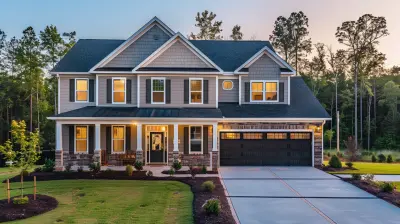
all images in this post were generated using AI tools
Category:
Home AffordabilityAuthor:

Elsa McLaurin