How Gen Z Will Impact Housing Preferences by 2026
4 September 2026
The real estate industry has spent the last decade trying to decode millennials. Now, the spotlight is shifting to Gen Z, the cohort born roughly between 1997 and 2012. By 2026, the oldest members of this generation will be 29, squarely in the prime first-time homebuying window. The youngest will be 14, still living with their parents but already forming opinions about what home means. Ignoring this demographic shift is not an option for builders, investors, landlords, or real estate agents. The preferences of Gen Z are not just a slightly tweaked version of millennial tastes. They are a fundamental response to a different economic reality, a different digital upbringing, and a different set of anxieties about the future.
The Financial Reality Check: Smaller Budgets, Bigger Expectations
The most significant factor shaping Gen Z housing preferences is not a design trend. It is math. This generation entered the workforce during or just after the pandemic, faced the highest inflation in four decades, and is now dealing with mortgage rates that hover near generational highs. Unlike millennials who bought homes in the 2010s with sub-4 percent rates, Gen Z buyers in 2026 will likely see rates in the 5.5 to 7 percent range. That difference is not academic. On a $300,000 loan, a 3.5 percent rate means a principal and interest payment of about $1,347. At 6.5 percent, that payment jumps to $1,896. That is a $549 monthly difference, which is roughly the cost of a car payment or a significant chunk of groceries.This financial pressure forces a practical shift. Gen Z will not be looking for the largest house they can barely afford. They will be looking for the smallest house that meets their needs, with the best long-term cost profile. The era of the 2,500-square-foot starter home is effectively over for this generation in most metro areas. Instead, expect a surge in demand for well-designed one-bedroom units, compact two-bedroom homes, and accessory dwelling units. The trade-off is clear: less square footage, but higher quality finishes and better energy efficiency. Gen Z would rather have a 900-square-foot home with solar panels, a heat pump, and smart thermostats than a 1,500-square-foot home with drafty windows and an aging furnace.
The common mistake here is assuming Gen Z will simply rent for longer and then buy the same type of home their parents bought. That assumption fails to account for the fact that many Gen Z workers have non-traditional income streams. Gig work, freelance contracts, and multiple part-time jobs make it harder to qualify for a mortgage, but they also make it harder to predict cash flow. Lenders are slowly adapting, but the real estate industry needs to prepare for a generation that may need alternative documentation, such as bank statements or proof of consistent side income. Builders who offer financing assistance or work with lenders who understand this new income reality will have a competitive edge.
Location is About Proximity, Not Prestige
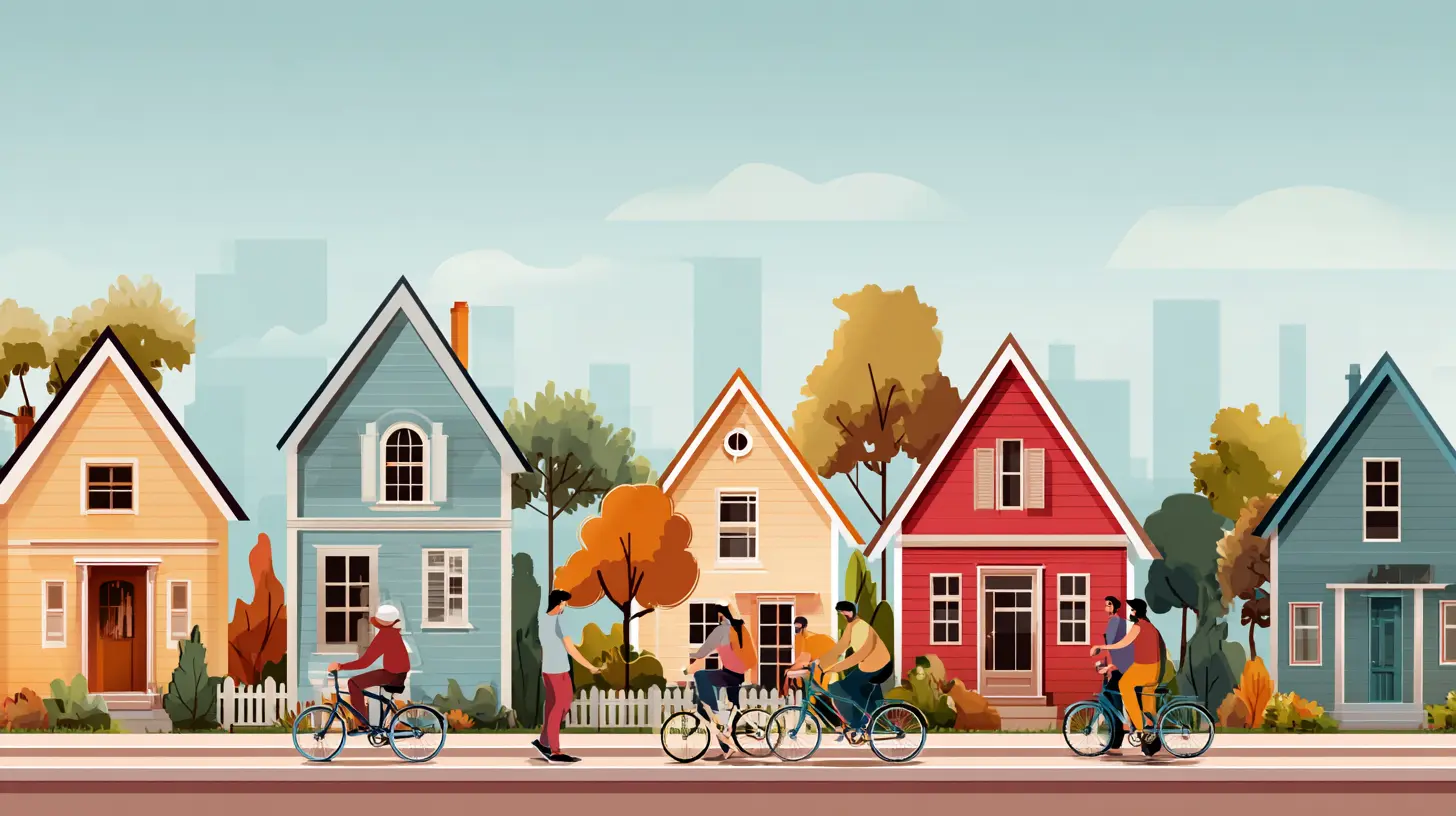
For baby boomers and many Gen Xers, buying a home was about moving to the "good" neighborhood. That often meant a leafy suburb with good schools, even if it meant a 45-minute commute. Gen Z has a different set of priorities. They grew up with the ability to work, shop, and socialize online. The pandemic proved that many jobs can be done remotely. As a result, the 2026 housing market will see a distinct preference for what urban planners call the "15-minute city" concept, even if Gen Z does not use that term. They want to live within a 15-minute walk or bike ride of groceries, coffee shops, gyms, parks, and public transit.This does not mean Gen Z is abandoning the suburbs entirely. It means they are redefining the suburb. The new desirable suburb is a walkable, mixed-use community with a main street, not a cul-de-sac development with a golf course. Real-world examples of this shift are already visible in places like Arlington, Virginia, outside Washington D.C., or the Pearl District in Portland, Oregon. These areas offer mid-rise apartments and townhomes above ground-floor retail, with easy access to transit. Gen Z will pay a premium for this kind of location because it reduces their dependence on cars, which saves money and aligns with their environmental values.
The trade-off is that these walkable areas are often more expensive per square foot. A Gen Z buyer in 2026 will need to decide whether they want a larger home in a car-dependent area or a smaller home in a location where they can sell one of their two cars. Many will choose the latter. The best advice for investors and developers is to look for underutilized commercial corridors near existing transit that can be rezoned for mixed-use development. The days of building a stand-alone subdivision with no commercial component and expecting it to attract young buyers are numbered.

The Home Office is Non-Negotiable
Remote and hybrid work is not a temporary trend. Many large employers have made it permanent, and even those that require office attendance often allow two or three days of remote work per week. By 2026, a home without a dedicated workspace will be a hard sell to Gen Z. This is not about having a desk in the corner of the living room. It is about having a separate room with a door, good acoustics, and reliable high-speed internet. Video calls are the new meeting room, and nobody wants their colleagues to see their unmade bed in the background.This preference has a direct impact on home design. The typical three-bedroom, two-bathroom suburban home may need to be reconfigured. A more desirable layout for Gen Z might be a two-bedroom home plus a small office den, or a three-bedroom home where the third bedroom is specifically wired for high-speed internet and has soundproofing. Builders should consider making the office a standard feature rather than an upgrade. The cost of adding a basic office nook with a window and extra outlets is minimal compared to the premium it can command in the resale market.
However, there is a nuance. Not all Gen Z workers are remote. Many work in healthcare, retail, hospitality, and trades. For these workers, proximity to their job site is more important than having a home office. The mistake is to assume that every young buyer needs a dedicated workspace. The smart approach is to offer floor plans with flexible rooms that can serve as an office, a guest room, or a nursery. A room with a closet and a window can easily transition between uses. A room that is too small for a bed but too large for a closet is a waste of money.

Sustainability as a Budget Item, Not Just a Value
Every generation says they care about the environment. Gen Z actually behaves differently. They grew up with recycling bins in every classroom and saw the smoke from wildfires on their news feeds. But in 2026, the most compelling reason for Gen Z to buy an energy-efficient home is not saving the planet. It is saving their own bank account. Energy prices have been volatile, and utility bills are a significant monthly expense. A home with solar panels, high-quality insulation, and an energy-efficient heat pump can reduce those bills by 30 to 50 percent.The practical implication is that Gen Z buyers will be willing to pay a premium for homes that have lower operating costs. The challenge is that many existing homes are not energy-efficient. Retrofitting an older home with new windows, insulation, and a heat pump is expensive. This creates a market for "green fixer-uppers" where the purchase price is lower, but the buyer has the capital to invest in upgrades. Alternatively, new construction that meets passive house standards or net-zero ready criteria will have a strong appeal.
There is a common misconception that green homes are only for wealthy buyers. That is untrue, but it is based on a real problem. The upfront cost of solar panels or a geothermal system is high. By 2026, expect to see more builders offering "energy-efficient as a service" models, where the cost of the system is bundled into the mortgage or a monthly fee. Gen Z is comfortable with subscription models for software and entertainment. They will accept a subscription for their home's energy system if it lowers their total monthly cost.
The Digital Native's Approach to Buying and Selling
Gen Z is the first generation to have never known a world without smartphones, social media, and on-demand services. This shapes how they search for homes. They will not spend hours driving around neighborhoods looking for "For Sale" signs. They will start on Zillow, Redfin, or Realtor.com, but they will also check TikTok and Instagram for home tours. Real estate agents who do not have a strong video presence or who refuse to communicate via text or direct message will be ignored.More importantly, Gen Z expects a high degree of transparency and self-service. They want to see floor plans, 3D virtual tours, and price histories before they even contact an agent. They are comfortable with algorithms that suggest homes based on their search history. The traditional model of a real estate agent holding all the information and doling it out during a tour is obsolete for this generation. Agents need to pivot to being advisors and negotiators rather than gatekeepers of information.
The trade-off is that Gen Z may be overconfident in their ability to assess a home without seeing it in person. Virtual tours are excellent, but they cannot convey the smell of a damp basement or the noise from a nearby highway. The best practice for a real estate professional is to use digital tools to narrow down the list, but then strongly encourage an in-person visit. Gen Z is more likely to use digital mortgage lenders and online closing services. By 2026, expect a significant portion of home purchases to be conducted almost entirely online, with the physical signing of documents becoming a rare event.
The Rise of Co-Living and Multi-Generational Households
The stereotype of the single-family home with a white picket fence is fading. Gen Z is facing a housing affordability crisis that is worse than what millennials faced. One response is co-living, where unrelated adults share a larger home or apartment, each with a private bedroom and bathroom, but sharing common areas like the kitchen and living room. This is not a college dorm. Purpose-built co-living developments offer high-end amenities, cleaning services, and community events. By 2026, this model will move from a niche urban rental option to a viable ownership structure in some markets.Another trend is the return of the multi-generational household. With childcare costs soaring and elder care becoming more complex, many Gen Z adults are choosing to live with their parents or grandparents. This is not a failure to launch. It is a strategic financial decision. A family that pools resources can afford a larger home or a property with an accessory dwelling unit. Builders who offer plans with a separate entrance for a grandparent suite or a young adult child will find a ready market.
The common mistake is to view these trends as temporary. They are not. The economic conditions that drive co-living and multi-generational living are likely to persist. The single-person household is becoming less affordable, and the nuclear family is no longer the only model. Real estate professionals should learn to market to these non-traditional households. This means being open to multiple names on a mortgage, understanding the legalities of co-ownership agreements, and recognizing that the "family room" might need to be a "common room" instead.
Renting is Not a Four-Letter Word
There is a persistent cultural bias in the United States that renting is "throwing money away" and that homeownership is the only path to financial security. Gen Z is more pragmatic. They have seen the housing market crash in 2008 and the rapid price increases of 2020 to 2022. They understand that buying a home is not always a good investment, especially if you might need to move for a job in three years. By 2026, many Gen Z members will still be renting, not because they cannot afford to buy, but because they choose not to.This has profound implications for the rental market. Landlords cannot assume that renters are passive and will accept poor conditions. Gen Z renters expect a high level of service, including online rent payment, easy maintenance requests through an app, and smart home features like keyless entry and video doorbells. They are also more likely to move if their rent is raised excessively or if the property is not well maintained. High turnover is expensive for landlords, so investing in tenant satisfaction is a sound financial strategy.
The trade-off for Gen Z is that renting offers flexibility but does not build equity. By 2026, expect to see more creative solutions to bridge this gap, such as rent-to-own programs or co-op housing models. The real estate industry should not treat renters as second-class citizens. A well-managed rental property can provide a stable, high-quality living environment that meets Gen Z's needs without the long-term commitment of a mortgage.
Design Preferences: Warm Minimalism and Functionality
The aesthetic preferences of Gen Z are distinct from the gray-on-gray minimalist look that dominated millennial decor. Gen Z is moving toward what designers call "warm minimalism." This involves natural materials like wood and stone, warm neutral colors like beige and terracotta, and plenty of plants. The goal is a calm, uncluttered space that feels inviting rather than sterile. Expect to see a rejection of the all-white kitchen and a move toward darker cabinets, brass fixtures, and textured surfaces.Functionality is paramount. Gen Z does not want a formal dining room that is used twice a year. They want a large kitchen island that can serve as a dining table, a workspace, and a social hub. They want mudrooms with built-in storage for outdoor gear and pet supplies. They want laundry rooms on the same floor as the bedrooms, not in the basement. Builders who offer these practical features will find that Gen Z buyers are willing to pay for them, even if it means sacrificing overall square footage.
The common mistake is to assume that Gen Z wants the same "open concept" floor plan that has been popular for 20 years. While they do want a sense of openness, they also value privacy and quiet. The pandemic taught them that it is hard to concentrate when you can hear the television from the kitchen. The best floor plans for 2026 will offer open common areas but also provide a visual or physical separation for private spaces. Pocket doors, sliding barn doors, and partial walls can create flexibility without making the space feel closed off.
The Impact on Suburban and Rural Markets
While much of the discussion about Gen Z focuses on cities, this generation will have a significant impact on suburban and even rural markets. The rise of remote work allows some Gen Z workers to live anywhere. This is leading to a phenomenon sometimes called "zoom towns," where smaller communities with good internet access and a lower cost of living attract young remote workers. By 2026, expect to see continued migration to secondary cities like Boise, Idaho; Knoxville, Tennessee; or even smaller towns in the Mountain West.The trade-off is that these areas often lack the cultural and social amenities that Gen Z values. A young adult who moves to a small town for remote work may quickly find that there is no community of peers, no good coffee shop, and no dating scene. The result is that some will move back to urban areas after a year or two. This creates a real estate market with high turnover and volatile prices. Investors should be cautious about buying in a "zoom town" based solely on current remote work trends. The long-term viability of these communities depends on whether they can build the amenities that attract and retain young people.
What Builders and Developers Need to Change by 2026
The construction industry is notoriously slow to adapt. The standard suburban development model, with large lots, wide streets, and single-family homes set far back from the road, is not aligned with Gen Z preferences. Builders who want to capture this market need to change their approach. This means building smaller homes on smaller lots, increasing density, and creating walkable communities with mixed uses. It means offering floor plans that are flexible and multi-functional. It means including energy-efficient systems and smart home technology as standard features, not expensive upgrades.The challenge is that this type of development is often harder to finance and more complex to build. Zoning laws may need to be changed. Neighbors may resist higher density. However, the market is shifting. Builders who cling to the old model will find themselves with an oversupply of large homes that no one wants to buy. The ones who embrace change will thrive.
Practical Advice for Real Estate Agents
For real estate agents, the shift to Gen Z requires a significant change in communication style. Email is acceptable, but text is preferred. Phone calls are often screened. Video content is essential. An agent who cannot produce a quick, honest video tour of a property will be at a disadvantage. Agents also need to be more knowledgeable about the financial challenges facing Gen Z. They should be able to explain down payment assistance programs, first-time homebuyer tax credits, and the pros and cons of different mortgage products.The most successful agents will act as educators, not just salespeople. They will help Gen Z buyers understand the true cost of homeownership, including property taxes, insurance, and maintenance. They will be honest about the trade-offs between buying and renting. This builds trust, and trust is the most valuable currency with a generation that has been bombarded with misleading information online.
The Misconception About "Staying in the Basement"
A common narrative is that Gen Z will simply live with their parents indefinitely because they are lazy or lack ambition. This is a misreading of the situation. Many Gen Z members live with family to save for a down payment, to care for aging relatives, or to pay off student debt. By 2026, many of these individuals will be ready to move out, and they will have substantial savings. This "pent-up demand" could create a surge in the housing market. Real estate professionals should not write off Gen Z as a lost cause. They are just waiting for the right moment and the right product.Final Thoughts on Preparing for 2026
The housing market of 2026 will belong to those who understand that Gen Z is not a homogenous group. A 28-year-old software engineer in Austin has different needs than a 24-year-old nurse in Pittsburgh or a 26-year-old tradesperson in Ohio. The common threads are a desire for affordability, efficiency, flexibility, and community. The generation that was raised on the internet expects a seamless digital experience but also craves genuine human connection. They are cautious about debt but are willing to invest in things that improve their daily lives.The real estate industry must adapt to a world where the car is no longer king, where the home office is essential, and where sustainability is measured in dollars saved. The days of "sprawl and more" are ending. The future is about building smarter, not bigger. By understanding the deep motivations behind Gen Z preferences, rather than just the surface-level trends, developers, investors, and agents can position themselves for success in 2026 and beyond.
all images in this post were generated using AI tools
Category:
Housing TrendsAuthor:

Elsa McLaurin
Discussion
rate this article
2 comments
Ian Franklin
Gen Z will likely turn the housing market into a kaleidoscope of quirky spaces and eco-friendly vibes. Tiny homes, treehouses, and co-living adventures are just the beginning...
September 24, 2026 at 4:28 AM
Casey McLanahan
Gen Z will shake things up in housing like a good dance party! Expect eco-friendly homes, Wi-Fi galore, and community vibes. House hunting? More like treasure hunting with a side of avocado toast... and a splash of sustainability!
September 22, 2026 at 2:49 AM