The Decline of Office Space and Its Impact on Housing by 2026
2 October 2026
The office was never just a place to work. It was a sorting mechanism for cities. It decided where trains ran at 8 a.m., where lunch counters opened, where taxes were collected, and, quietly, where people could afford to live. When that mechanism weakens, the effects do not stay inside commercial real estate. They move into the housing market, sometimes within a few blocks, sometimes across an entire metropolitan region.
By 2026, the decline of office space will be far enough along to judge. Not as a headline, but as a structural shift with winners, losers, and a long list of unintended consequences. This article looks at what is actually happening, why it matters for housing, and how to think through the decisions that will define the next several years.

Why Office Demand Is Not Coming Back the Way It Was
The simplest way to understand the office problem is to separate two questions that are often confused: How many people still work? And how much space does each worker need?Employment in office-using sectors has held up better than many predicted. But space per worker has fallen sharply. Hybrid schedules mean a desk that once served one person five days a week now serves two or three people two or three days a week. Companies that signed 15-year leases in 2015 are discovering they need roughly half the square footage, sometimes less.
This is not a temporary adjustment. It is a repricing of a physical asset class based on a change in behavior. And behavior, once changed, rarely snaps back to a prior equilibrium. The office market is not dying. It is shrinking to a smaller, better-quality core while a long tail of mediocre buildings struggles to find any tenant at all.
The Quality Split Nobody Can Ignore
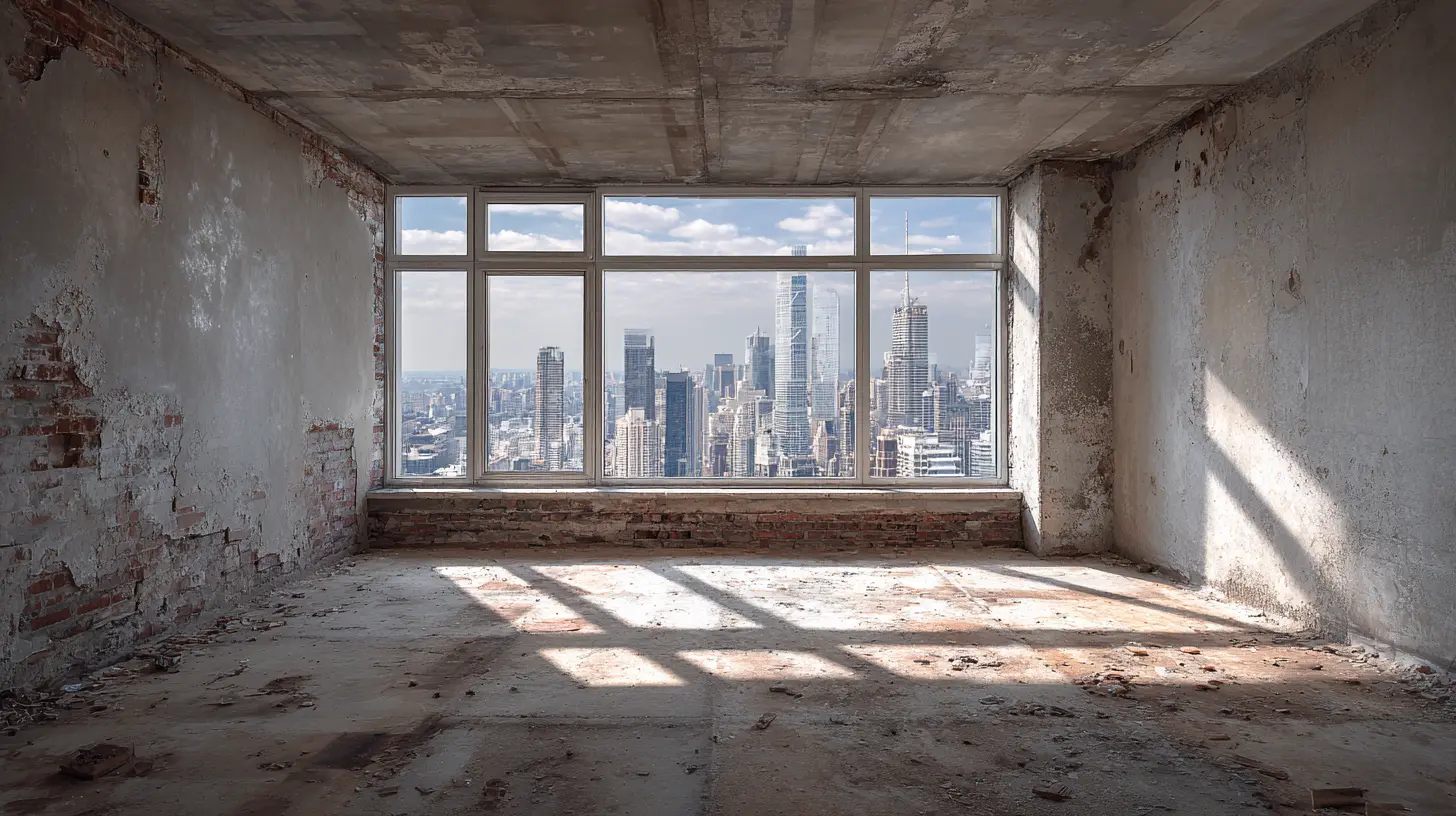
The most important word in commercial real estate right now is "bifurcation." Trophy buildings in prime locations with strong amenities are still leasing. Class B and C buildings in secondary locations are not. The gap between them is widening, not closing.For housing, this matters because the buildings most likely to be converted, demolished, or left vacant are precisely the ones that are hardest to convert. Older floor plates, deep interiors, limited windows, and single-stair configurations make residential reuse expensive or impossible. The buildings that would convert easily are often the ones still generating income.
That mismatch is the central tension of the next few years.
How Office Decline Actually Reaches Housing
There is a tendency to tell a simple story: offices empty out, cities convert them to apartments, and the housing crisis eases. That story is partly true and mostly incomplete. The real transmission channels are more varied.Channel One: Municipal Revenue
Cities that depend heavily on commercial property taxes face a slow-moving fiscal problem. Office valuations lag leases by years, so the pain arrives gradually. When it arrives, municipalities have three options: raise taxes, cut services, or find new revenue. Each choice affects housing.Raising residential property taxes to cover commercial shortfalls makes ownership more expensive. Cutting services, especially transit and schools, reduces the attractiveness of central neighborhoods. Finding new revenue often means encouraging development, which can help housing supply but also strains infrastructure.
The key insight: office decline does not just reduce demand for housing in a city. It can reduce the city's capacity to support housing.
Channel Two: Land Values and Construction Feasibility
When office land values fall, the math for residential development changes. In some cases, this makes housing projects feasible that were not before. In others, it creates a standoff: owners who paid high prices refuse to sell at a loss, and developers cannot make the numbers work at current values.This standoff can freeze a neighborhood for years. The land sits, half-empty, waiting for a price discovery that neither side wants to accept. Meanwhile, housing supply in that location stalls.
Channel Three: Neighborhood Composition
Office districts have a peculiar rhythm. They are busy from 9 to 6 and empty otherwise. When offices empty permanently, that rhythm disappears. What replaces it depends on what gets built.If conversions bring residents, the neighborhood gains evening activity, grocery stores, schools, and services. If conversions do not happen, the neighborhood becomes a dead zone, which drags down surrounding residential values and quality of life.
Channel Four: Transit and Infrastructure
Transit systems designed around commuting patterns are particularly exposed. If peak-hour ridership falls, agencies face budget gaps. Service cuts follow. Reduced service makes peripheral neighborhoods less attractive, which pushes demand back toward the center, which raises rents in the areas least able to absorb them.This is a feedback loop, and it is one of the most underappreciated housing risks of the office decline.

Office-to-Residential Conversion: Promise and Reality
Conversion is the most discussed response, and it deserves a careful look. It works in some cases and fails in many others. Understanding why is essential.What Makes a Building Convertible
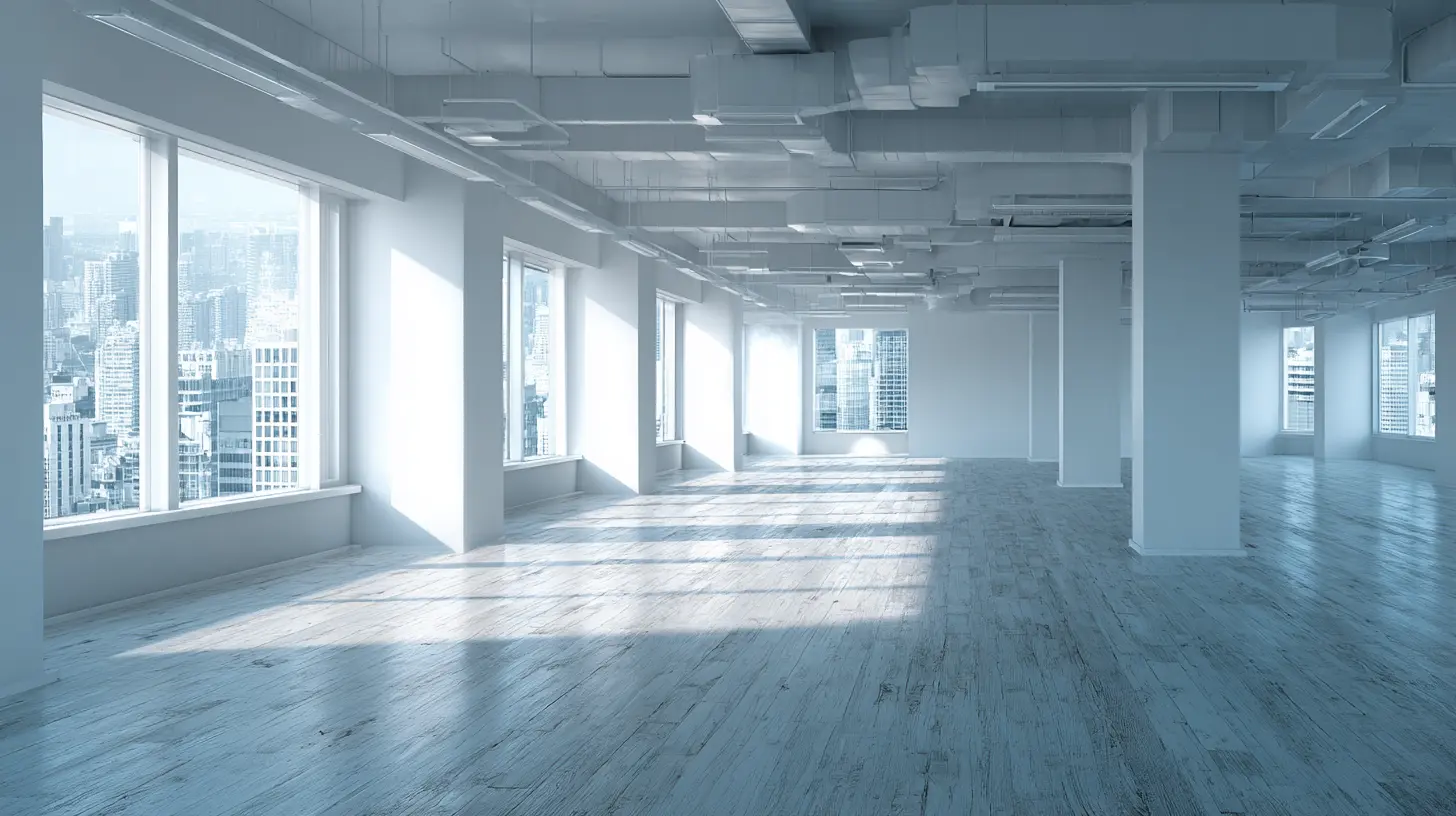
The best candidates share several traits:- Floor plates that are not too deep, so apartments can get natural light
- A shape that allows windows on multiple sides
- Ceiling heights that accommodate residential plumbing and ductwork
- A structural grid that aligns with apartment layouts
- Location in a neighborhood where people actually want to live
- A purchase price low enough to absorb conversion costs
When these align, conversion can be faster than ground-up construction and can reuse existing infrastructure. It also preserves the embodied carbon in the building, which matters for sustainability goals.
What Makes Conversion a Trap
The opposite conditions are common. Deep floor plates create windowless bedrooms or awkward layouts. Single-stair buildings cannot meet modern fire codes without expensive reconfiguration. Plumbing risers are in the wrong places. The building is in a location with no amenities, no transit, and no demand.In these cases, conversion is technically possible but economically irrational. The cost per unit can exceed new construction, and the resulting apartments are often inferior.
The Cost Reality
Conversion costs vary widely, but the pattern is consistent: they are almost always higher than people expect. Structural work, mechanical systems, elevators, and code compliance add up. A project that looks cheap on paper can become expensive quickly.This is why many announced conversions never break ground. The announcement is easy. The financing is not.
A Practical Rule
Before assuming a conversion will help housing supply, ask three questions:1. Can the building produce apartments people want to live in?
2. Can it be done at a cost that supports rents the market will pay?
3. Is the location one where residential demand actually exists?
If the answer to any of these is no, the conversion is unlikely to happen, regardless of policy incentives.
The Cities Most Exposed
Not all cities face the same risk. The exposure depends on how concentrated office employment is, how dependent the tax base is on commercial property, and how flexible the housing market is.Cities with a heavy concentration of older office stock and a large share of property tax revenue from commercial buildings are most vulnerable. Cities with diversified economies, strong residential demand, and flexible zoning are better positioned.
The difference is not just economic. It is political. Cities that can move quickly to rezone, streamline permitting, and support conversion will adapt. Cities that cannot will watch buildings sit empty while housing costs rise.
What Happens to Housing Prices
The relationship between office decline and housing prices is not straightforward. It depends on the time frame and the geography.In the short term, office decline can reduce demand for housing in neighborhoods that depended on office workers. Rents may soften. This is happening in some downtowns already.
In the medium term, if conversions and new development add supply, prices in those areas may stabilize or fall. This is the optimistic scenario.
In the long term, if office decline weakens municipal finances and transit, the entire region becomes less attractive, and prices may fall across the board. This is the pessimistic scenario.
The most likely outcome is a mix. Some neighborhoods benefit from new supply and renewed activity. Others decline. The gap between them widens.
Misconceptions That Lead to Bad Decisions
Several misconceptions keep showing up in policy discussions and investment theses. Each one is worth correcting.Misconception One: All Vacant Offices Can Become Housing
Most cannot, at least not economically. The physical and financial barriers are real. Policy that assumes otherwise wastes money and time.Misconception Two: Office Decline Means Housing Will Get Cheaper
It might, in specific places. But if the decline weakens the city's ability to provide services and transit, the opposite can happen. Housing affordability is not just about supply. It is about the quality of the place.Misconception Three: Remote Work Is the Only Cause
Remote work is a major factor, but not the only one. Demographic shifts, corporate consolidation, and changes in how companies use space all play a role. Treating remote work as the sole cause leads to oversimplified solutions.Misconception Four: Conversions Are Always Good for Affordable Housing
Market-rate conversions can add supply, which helps indirectly. But they rarely produce affordable units without subsidy. Assuming otherwise leads to disappointment.Practical Advice for Different Readers
The office decline affects different people differently. Here is how to think about it depending on your position.If You Own Residential Property Near an Office District
Watch the conversion pipeline, not the headlines. If several buildings nearby are converting, expect more residents, more services, and potentially more competition for parking and schools. If nothing is converting, expect prolonged uncertainty. Consider the long-term trajectory of the neighborhood, not just the next year.If You Are a Developer
Run the conversion math honestly. Do not assume incentives will cover the gap. Focus on buildings with the right physical characteristics and locations. Be prepared to walk away from deals that do not work.If You Are a City Official
Prioritize speed and certainty. The biggest barrier to conversion is often process, not cost. Streamlined permitting, clear code pathways, and predictable timelines can make more projects feasible. Also, protect transit. It is the backbone of residential demand.If You Are a Renter or Buyer
Pay attention to the fiscal health of your city. A city with a shrinking commercial tax base and rising residential taxes is a city under stress. Look at where new housing is being built and where it is not. The pattern tells you more than any forecast.
What to Watch Between Now and 2026
Several indicators will reveal how this plays out. They are worth tracking.- The pace of actual conversions, not announcements
- Commercial property tax assessments and appeals
- Transit ridership and service levels
- Residential permitting in and around office districts
- Municipal budget gaps and how they are closed
These are not glamorous metrics. They are the ones that matter.
A Balanced View
It is tempting to see the office decline as either a catastrophe or an opportunity. It is both, depending on where you are and what you do.The catastrophe scenario is real: hollowed-out downtowns, strained budgets, reduced services, and rising housing costs in the places that still work. The opportunity scenario is also real: new housing in well-located buildings, more vibrant mixed-use neighborhoods, and a chance to rethink how cities use space.
Which scenario dominates depends on decisions made now. Not on forecasts. On choices.
Final Thoughts
The decline of office space is not a single event. It is a slow unwinding of a system that shaped cities for decades. Its impact on housing will be uneven, gradual, and deeply local.The people who navigate this well will be the ones who resist simple stories. They will look at specific buildings, specific neighborhoods, and specific budgets. They will ask hard questions about feasibility and timing. They will accept that some conversions will work and many will not.
That is not a satisfying answer. It is the honest one.
all images in this post were generated using AI tools
Category:
Housing TrendsAuthor:

Elsa McLaurin