The Psychology of Money and Smart Real Estate Moves
19 October 2026
Most people think they make real estate decisions with spreadsheets. They run the numbers, compare mortgage rates, look at cap rates, and pat themselves on the back for being rational. Then they buy the house with the prettiest kitchen, panic-sell during a downturn, or hold onto a bad rental for a decade because selling would mean admitting they were wrong.
The spreadsheet was never in charge. The brain was, and the brain is a strange little machine that would rather feel safe than be right. Understanding that gap between what we think we're doing and what we're actually doing is the single most useful skill in property investing. It's also the one almost nobody teaches you.
Let's talk about the psychology of money, why it quietly wrecks otherwise smart real estate moves, and how to build systems that protect you from your own worst instincts.

Why Money Messes With Your Head
Money isn't just a medium of exchange. It's a stand-in for safety, status, freedom, love, and a dozen other things we don't like to say out loud. When you put a large chunk of your net worth into a property, you're not just allocating capital. You're putting your sense of security on the line, and your brain knows it.Behavioral economists have spent decades documenting how people mishandle money. The findings are consistent and a little humbling. We feel losses roughly twice as painfully as we feel equivalent gains. We overvalue what we already own. We anchor to the first number we hear. We follow crowds. We confuse recent trends with permanent reality.
None of this disappears when you get a real estate license or read a few books on investing. If anything, real estate amplifies these tendencies because the stakes are large, the transactions are slow, and the feedback loops are long. You can make a bad decision and not find out for five years. That's a dangerous combination for a brain that learns mostly through fast feedback.

The Endowment Effect: Why Your House Feels Worth More Than It Is
The endowment effect is the tendency to value something more highly simply because you own it. In real estate, this shows up every single day.A homeowner decides to sell. Their agent runs the comps and suggests a listing price. The homeowner is offended. "But we put in the new driveway. And the neighborhood is only going to get better. And this kitchen, I mean, have you seen this kitchen?"
Here's the thing. The buyer doesn't care about your driveway. They care about what they can get down the street for the same money. Your kitchen is lovely, but it's not worth a 15 percent premium over the identical house two blocks away with a slightly older kitchen.
The endowment effect also explains why people hold losing rental properties far too long. The property is bleeding cash every month, the roof needs replacing, and the neighborhood has been trending the wrong way for years. But selling means crystallizing the loss, and that hurts. So the owner hangs on, telling themselves the market will come back, while the losses quietly compound.
What to do about it: Before you list a property or decide to hold one, ask yourself a simple question. If I didn't already own this, would I buy it today at this price? If the answer is no, that's your signal. It's not a guarantee you should sell, but it's a strong hint that ownership is clouding your judgment.
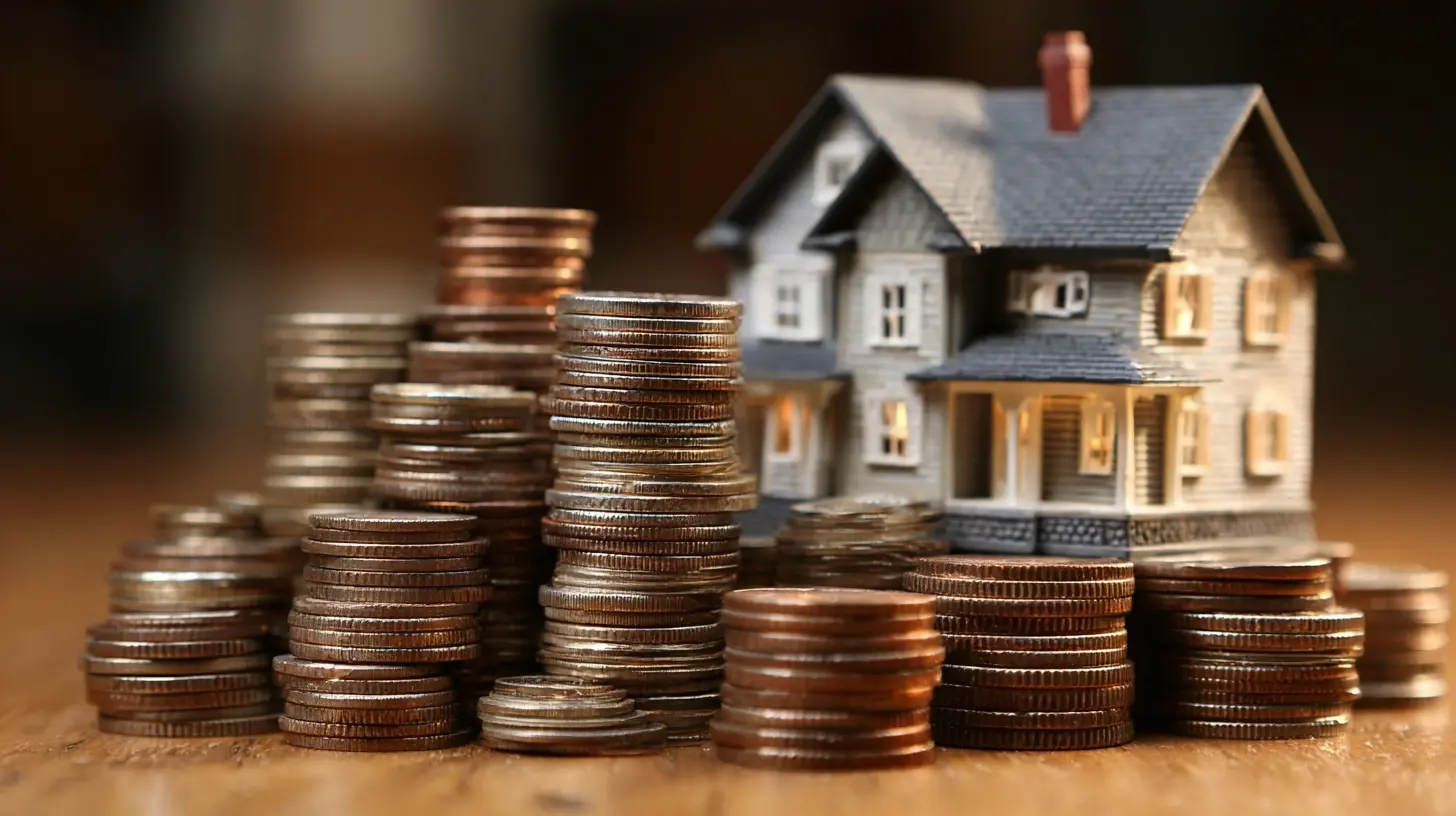
Loss Aversion and the Fear of Missing Out, Working Together
Loss aversion makes us cling to what we have. Fear of missing out makes us chase what we don't. In real estate, these two forces take turns driving the bus, and neither one is a good driver.During hot markets, FOMO wins. Buyers waive inspections, pay above asking, and stretch their budgets because "if we don't get this one, we'll never find another." They're not analyzing the deal. They're avoiding the pain of losing out to someone else. The problem is that the pain of a bad purchase lasts a lot longer than the sting of a missed opportunity.
During cold markets, loss aversion wins. Sellers refuse to accept that their property is worth less than it was two years ago, so they hold out for a price the market won't pay. Meanwhile, the carrying costs pile up and the property sits.
The seasoned investor does something different. They have a written set of criteria before they start looking. Maximum purchase price, minimum cash flow, acceptable condition, target neighborhood. When a deal meets the criteria, they move. When it doesn't, they walk, even if the kitchen is gorgeous and the bidding war is heating up.
This sounds boring. It is boring. Boring is profitable.

Anchoring: The Number That Won't Leave Your Head
Anchoring is the tendency to rely too heavily on the first piece of information you encounter. In real estate, anchors are everywhere.The seller's asking price is an anchor. So is the price your neighbor got two years ago. So is the Zestimate, that algorithmic guess that has convinced millions of people they know what their house is worth.
Here's a concrete example. A house is listed at 600,000 dollars. It's been on the market for four months with no offers. The seller drops the price to 550,000 dollars. Buyers now feel like they're getting a deal because the number is lower than the original ask. But the original ask was never grounded in reality. The house might be worth 500,000 dollars. The anchor did its job.
The fix: Ignore the asking price when you evaluate a deal. Build your own valuation from the ground up using recent comparable sales, rental income potential, and repair costs. If your number and the seller's number don't meet, walk away. The asking price is the seller's opinion, not a fact.
Mental Accounting: The Money in Your Head Is Not the Money in Your Bank
Mental accounting is the habit of treating money differently depending on where it came from or what it's earmarked for. It's why people will drive across town to save 20 dollars on a 40 dollar item but won't drive across town to save 20 dollars on a 2,000 dollar item. The 20 dollars feels different depending on the context, even though it's the same 20 dollars.In real estate, mental accounting shows up in some sneaky ways.
The home equity line of credit is a classic. It feels like free money because you're not selling the house. But it's not free. It's a loan secured by your home, and if you blow it on a boat, you've turned a safe asset into a risky one.
Rental income is another. Some landlords treat rent checks as "house money" and spend them on upgrades or vacations, while treating their salary as "real money" that goes into savings. But a dollar of rent and a dollar of salary buy the same groceries. The source doesn't change the value.
The fix: Consolidate your view of money. Track your total net worth, not separate buckets. When you're evaluating a financial decision, ask whether you'd make the same choice if the money came from a different source. If the answer changes, mental accounting is running the show.
The Sunk Cost Trap: Throwing Good Money After Bad
Sunk cost fallacy is the tendency to keep investing in something because of what you've already put in, rather than because of what you expect to get out. It's the reason people sit through terrible movies and finish meals they stopped enjoying three bites ago.Real estate is full of sunk costs. You've spent 30,000 dollars on renovations. The project is over budget and the market has softened. Do you keep going because you've already spent so much, or do you stop and reassess? The 30,000 dollars is gone either way. The only question that matters is whether the next dollar will earn a decent return.
This gets especially painful with problem properties. A landlord buys a building with good intentions, then discovers the plumbing is shot, the tenants are difficult, and the neighborhood is rougher than expected. Every month, they pour more money in, telling themselves they're "protecting their investment." What they're really doing is protecting their ego.
The fix: Make decisions based on future costs and benefits, not past spending. Ask yourself, "If I were starting fresh today, would I buy into this situation?" If the answer is no, the sunk costs are doing the talking.
Overconfidence: The Quiet Killer of Real Estate Portfolios
Overconfidence is the tendency to believe we're better at predicting the future than we actually are. It's especially dangerous in real estate because the market is influenced by interest rates, local employment, population trends, construction costs, and a hundred other factors that no single person can reliably forecast.The overconfident investor buys at the top of the market because they're sure prices will keep climbing. They skip the inspection because they "know a guy" who can fix anything. They take on more leverage than they can handle because they're certain rents will rise.
Then something unexpected happens, because something unexpected always happens, and the overconfident investor discovers that confidence is not collateral.
The fix: Build in margin for error. Assume your rent will be 5 to 10 percent lower than you project. Assume your vacancy will be higher. Assume repairs will cost more. If the deal still works under those assumptions, it's probably a good deal. If it only works under perfect conditions, it's not a deal at all.
Herd Behavior: Why Everyone Buying Condos Doesn't Mean You Should
Humans are social animals. When everyone around us is doing something, it feels safe. When everyone is buying real estate, it feels like the smart move. When everyone is selling, it feels like the world is ending.This is herd behavior, and it's one of the most reliable ways to lose money in any asset class. The crowd is often right in the middle of a trend and wrong at both ends. By the time your neighbor, your barber, and your cousin's dog walker are all talking about how much money they made flipping houses, the easy money has usually already been made.
The contrarian move is rarely comfortable. Buying when others are fearful feels reckless. Selling when others are greedy feels premature. But the investors who build lasting wealth tend to do exactly that, not because they're smarter than everyone else, but because they've learned to notice when the crowd is driving their decisions.
The fix: Before you make a major real estate move, ask yourself whether you'd still make it if nobody else was doing it. If the answer is no, you might be following the herd rather than following the numbers.
The Recency Bias: Why the Last Five Years Feel Like Forever
Recency bias is the tendency to give more weight to recent events than to long-term patterns. In real estate, this shows up as the belief that whatever has been happening lately will keep happening forever.Prices have gone up for three years straight? They'll keep going up. Rents have been flat for two years? They'll stay flat. Interest rates are low? They'll stay low.
Anyone who has been in real estate for more than a decade knows this is nonsense. Markets cycle. Rates move. Neighborhoods change. The only constant is change, and the people who forget that tend to get caught flat-footed.
The fix: Zoom out. Look at data going back at least 20 years, ideally longer. Understand that the last few years are one data point in a much larger series. Build your plans around long-term averages, not recent extremes.
What Smart Real Estate Moves Actually Look Like
So what does all this psychology mean for your actual decisions? Here's where the rubber meets the road.Buy With a Margin of Safety
The concept comes from value investing, but it applies beautifully to real estate. Never pay the maximum you can afford. Never assume the best-case scenario. Leave room for things to go wrong, because they will.A margin of safety might mean buying a property that cash flows at a 7 percent cap rate when you only need 5 percent to make the deal work. It might mean keeping six months of reserves for each property. It might mean buying in a neighborhood with room to improve rather than one that's already peaked.
The point is simple. You're not trying to maximize returns in the best case. You're trying to survive the worst case.
Separate the Decision From the Emotion
This is easier said than done, but it's the whole game. Before you make any major real estate decision, write down your criteria. Then evaluate the deal against those criteria, not against how you feel about the property.A checklist works well here. Maximum purchase price. Minimum cash-on-cash return. Maximum repair budget. Acceptable neighborhood metrics. If the deal fails any criterion, it's a no. No exceptions, no "but this one is different."
The checklist isn't there because you're stupid. It's there because you're human, and humans make worse decisions when they're excited, scared, or tired.
Use Time as a Filter
Real estate is a slow asset class, and that's actually a feature, not a bug. It gives you time to think. It gives you time to cool off. It gives you time to notice when you're about to make a decision based on fear or greed rather than analysis.Use that time deliberately. When you find a property you love, wait 48 hours before making an offer. When you're tempted to sell in a panic, wait a week. When you're about to stretch your budget, wait until you've slept on it three times.
The best real estate decisions are rarely made in a hurry. The worst ones almost always are.
Build Systems That Outlast Your Moods
Your brain is not a reliable business partner. It gets excited, scared, distracted, and overconfident, often all in the same week. The solution is to build systems that make good decisions the default, regardless of how you feel on any given day.That might mean automating your rent collection. It might mean setting up a separate account for property reserves. It might mean reviewing your portfolio on a fixed schedule rather than whenever you feel anxious. It might mean hiring a property manager so you're not making emotional decisions about tenants.
The goal is to remove the moments where your psychology gets to run the show.
Common Mistakes That Come Straight From Your Brain
Let's name a few of the classics, because recognizing them is half the battle.Buying the best house on the block. It feels safe because it's clearly the nicest. But you've paid a premium for features the neighborhood doesn't support, and you'll be the last to appreciate when the neighborhood improves.
Selling the winners and holding the losers. This is the disposition effect, and it's the opposite of what you should do. You sell the properties that are performing well because it feels good to lock in a gain, and you hold the underperformers because selling would mean admitting a mistake.
Confusing a good property with a good deal. A great house at a terrible price is a bad investment. A mediocre house at a great price can be an excellent one. The property and the deal are not the same thing.
Letting tax considerations drive the decision. Yes, depreciation and 1031 exchanges are powerful tools. No, you should not hold a bad property just to avoid a tax bill. The tax tail should never wag the investment dog.
Believing your own projections. Every financial model you build is a work of fiction until it's tested by reality. Treat your projections as hypotheses, not facts.
Misconceptions Worth Retiring
A few beliefs about real estate and money deserve a permanent vacation."Real estate always goes up." It doesn't. It has gone up over long periods in many markets, but there have been plenty of multi-year stretches where it went down. Ask anyone who bought in 2006.
"Renting is throwing money away." Renting is paying for shelter with flexibility and no maintenance obligations. Owning is paying for shelter with equity, risk, and responsibility. Neither is inherently superior. The right choice depends on your circumstances, your timeline, and your local market.
"You need to buy when you're young." You need to buy when it makes sense for your life and your finances. Age is a poor proxy for readiness.
"Leverage is always smart." Leverage amplifies returns, but it also amplifies losses. It's a tool, not a religion. Use it deliberately, and only when the deal can survive a downturn.
Practical Takeaways You Can Use This Week
Enough theory. Here's what to actually do.Write your investment criteria down. Not in your head. On paper. Include your maximum purchase price, minimum returns, target neighborhoods, and acceptable property condition. Review it before every deal.
Build a margin of safety into every projection. Cut your expected rent by 10 percent. Add 20 percent to your repair estimates. Increase your vacancy assumption. If the deal still works, you've found something worth pursuing.
Create a cooling-off rule. No offers on the same day you see a property. No sales decisions in the first week of a market downturn. No major financial moves after a bad night's sleep.
Track your decisions and their outcomes. Keep a simple log of every major real estate decision you make, what you expected, and what actually happened. Over time, you'll see patterns in your own behavior that no book can teach you.
Find someone who will tell you no. A good agent, a trusted advisor, or a brutally honest friend. Someone who will look at your deal and point out the flaws without worrying about hurting your feelings. This person is worth their weight in gold.
The Bottom Line
Real estate rewards patience, discipline, and clear thinking. It punishes impulsiveness, overconfidence, and emotional decision-making. The good news is that all of those traits can be managed once you know they exist.You don't need to become a robot. You just need to build systems that protect you from your worst instincts and let your best thinking do the work. The spreadsheet is a useful tool, but it's not the boss. You are, as long as you remember that your brain is always in the room, quietly whispering suggestions that may or may not be in your best interest.
Listen to it. Then check the numbers anyway.
all images in this post were generated using AI tools
Category:
Financial PlanningAuthor:

Elsa McLaurin