The Top Social Media Platforms for Real Estate Agents in 2027
3 September 2026
The social media landscape for real estate in 2027 is not about being everywhere. It is about being precise. The days of posting the same listing to five platforms and hoping for the best are long gone. Algorithms have matured, user behavior has fragmented, and the cost of attention has skyrocketed. For an agent, the difference between a thriving pipeline and a dry spell often comes down to platform choice, content strategy, and the willingness to adapt to how each network now actually works.
This guide is not a list of trendy apps. It is a strategic breakdown of where your time and marketing budget will deliver the highest return this year. We will look at the platforms that matter, what has changed, and how to use them without burning out.

The Core Shift: From Broadcasting to Niche Authority
Before we dive into individual platforms, you need to understand the macro trend. In 2025 and 2026, we saw the slow death of generic content. In 2027, that death is complete. Social media platforms now prioritize depth of topic authority over broad appeal. A video of a kitchen tour will get moderate views. A video explaining why that kitchen renovation adds 40 cents on the dollar in your specific zip code will dominate your local feed.This shift means you cannot treat social media as a digital billboard. You must treat it as a search engine for trust. Buyers and sellers are not just looking at your listings. They are vetting your knowledge, your negotiation style, and your familiarity with their specific neighborhood quirks. The platforms below are ranked not just by user count, but by their ability to convert that vetting process into a phone call.
1. Instagram: The Visual CRM You Are Underutilizing
Instagram remains the undisputed king for real estate, but not for the reasons most agents think. It is not about the grid. In 2027, the grid is a portfolio. The real work happens in two places: Reels and the DM (Direct Message) inbox.Why It Still Works
Instagram's algorithm has become incredibly sophisticated at localizing content. When you post a Reel tagged with a specific neighborhood, it does not just show it to your followers. It shows it to users who have interacted with content from that geographic area, even if they do not follow you. This is the single most powerful organic reach tool for an agent.The mistake most agents make is posting generic luxury home tours. If you work in a mid-sized market, a $2 million property will get likes, but it will not generate leads. The buyers for that property are not scrolling Instagram for fun. They are working with an agent already.
Instead, the winning strategy for 2027 is hyper-local educational content. Think "What does a new zoning law mean for your basement apartment?" or "Three things the inspector will not tell you about older roofs in this district." These posts establish you as the local authority, not just a key holder.
The DM as a Lead Capture Tool
The biggest change is the role of the DM. Instagram has rolled out automated response features that allow you to send a tailored message when someone saves or shares your post. You should be using this.When someone saves your post on "Closing cost breakdowns for first-time buyers," you can set up an automated welcome message that asks if they want a PDF checklist. This turns a passive viewer into an active conversation within seconds. The agents who treat Instagram as a CRM, tagging every inquiry and following up within the hour, are the ones closing deals.
When to Skip It
If your market is primarily sellers over the age of 65, Instagram is a secondary tool. You should still have a presence, but your focus should be on platforms where that demographic spends time. Do not let the visual appeal of Instagram fool you into ignoring your actual client avatar.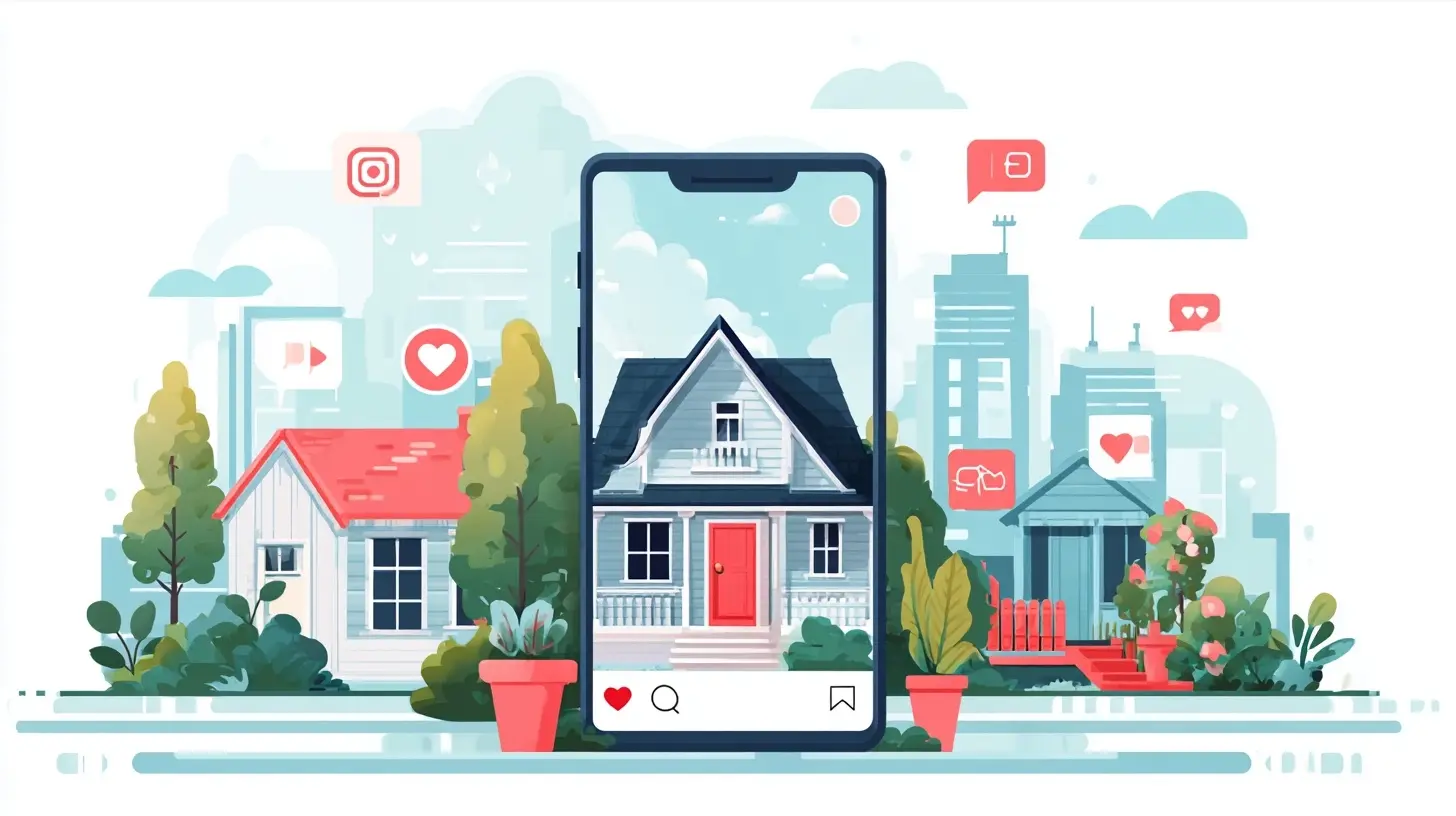
2. YouTube: The Long-Form Decision Engine
For years, agents treated YouTube as an afterthought, uploading a video tour and forgetting about it. That is a catastrophic error in 2027. YouTube has become the second-largest search engine in the world, and it is owned by Google. That means your YouTube content directly influences your Google ranking.The Shift to Walkthroughs and Market Analysis
Short-form video is great for awareness. YouTube is for conversion. A buyer who is considering a move to your city will watch a 15-minute neighborhood tour. They will not watch a 15-second Reel. They are looking for details: traffic patterns, school locations, grocery store proximity, and the feel of the street at 5 PM.In 2027, the most successful agents are publishing weekly "Market Pulse" videos. These are not scripted teleprompter reads. They are raw, honest breakdowns of what sold, what did not sell, and why. This content is indexed by Google, and when a seller searches "Is it a good time to sell in [Your City]?", your video appears.
The Power of Playlists
Do not just upload videos. Curate playlists. If you have a playlist called "Downtown Condo Buyers Guide" with 12 videos, a user will binge-watch them. That binge session signals to YouTube that your content is authoritative. This increases your visibility for all future videos.The Cost of Entry
The barrier here is time, not money. You do not need a cinema camera. A good smartphone, a lavalier microphone, and natural light are sufficient. What you need is consistency. One video per week for a year will put you ahead of 95 percent of agents in your market. The problem is that most agents quit after six weeks because they do not see immediate leads. The leads come in month four or five, and they come from people who have already watched ten of your videos and trust you before they ever call.
3. LinkedIn: The Unlikely Source of Luxury Listings
LinkedIn is often ignored by residential agents, which is exactly why it is a goldmine. In 2027, corporate relocation is back in full swing, and high-net-worth individuals are making moves based on job changes. These people do not scroll Instagram for houses. They scroll LinkedIn for professional content.Positioning Yourself as a Market Analyst
On LinkedIn, do not post listings. Post data. Share a graph of your local market's inventory levels. Write a short paragraph on how interest rates are affecting specific price brackets. This positions you as a business peer, not a salesperson.The people who comment on these posts are often hiring managers, HR directors, and executives. They are the ones who need to sell a house quickly because they are relocating, or they are buying a second home for a new regional office. These are high-commission, low-friction transactions because the buyer is usually pre-approved and serious.
The Republishing Strategy
Take your YouTube market analysis, transcribe the key points, and turn them into a LinkedIn article. This does not take extra time. It repurposes your work for a different audience. The tone is different, though. On LinkedIn, you write with more formality. You avoid "Hey guys!" and use "As we analyze the Q3 data..."The Professional Network Effect
Another advantage is the referral network. Mortgage brokers, attorneys, and title company executives are all on LinkedIn. If you consistently share intelligent market commentary, these professionals will refer clients to you because they want to work with someone who looks smart. It is a halo effect that you cannot buy with advertising.4. Facebook: The Community Hub for Sellers
Do not write off Facebook. It is not dead. It is just old, and in real estate, "old" often means "has equity." The average age of a Facebook user is rising, which means these are the people who actually own homes and are considering downsizing or selling.The Groups Strategy
In 2027, the Facebook feed is a wasteland for organic reach. But Facebook Groups are thriving. You need to be a member of every local community group in your area. Not the real estate groups, but the "Ask [Your Town] Residents" groups where people complain about traffic and ask for plumber recommendations.Your strategy here is not to post listings. It is to be helpful. Answer questions about property taxes. Explain the difference between a survey and an appraisal. When someone asks about a specific street, offer a detailed answer. Over time, your name becomes synonymous with local knowledge. When that person decides to sell, they will message you directly.
The Marketplace and Lead Ads
Facebook Marketplace is still a viable place to post entry-level listings and rentals. It attracts a demographic that is not yet ready to buy but is looking. More importantly, Facebook's lead ads that capture phone numbers with a single click are still the most cost-effective way to generate seller leads, if you target them properly.Target homeowners who have lived in their house for more than ten years. Those are the people sitting on massive equity. Your ad should not say "List with me." It should say "Find out what your neighbor's house actually sold for." This triggers curiosity and captures a lead that you can nurture over months.
The Pitfall
The biggest mistake is treating Facebook like Instagram. Posting a pretty photo of a living room will get lost. Facebook users want text posts, discussions, and local news. If you cannot write well, or you do not enjoy engaging in comment threads, Facebook will be a drain on your time. Delegate it or skip it.5. TikTok: The Lead Generation Wildcard
TikTok is polarizing. Many agents think it is for dancing teenagers. That is a misconception. In 2027, TikTok is the primary search engine for Gen Z and younger millennials, many of whom are first-time buyers.The Search Function
TikTok's search bar is now the go-to for "How to buy a house with low down payment" or "What is PMI?" If your content does not appear in those searches, you are invisible to the next generation of buyers.The format is raw and unpolished. A video of you sitting in your car explaining why you should not waive the inspection will outperform a professionally produced video. The algorithm rewards authenticity and speaking directly to the camera. It punishes high-gloss production because it looks like an ad.
The Funnel Reality
The problem with TikTok is that the lead quality is often lower. You will get a lot of comments from people who are not in your market and will never buy. You need to filter for geography immediately.Use text overlays that say "Only for buyers in [Your State]." State your city in the first three seconds. If you do not, you will waste hours responding to comments from users in other countries.
When to Avoid It
If you are a luxury agent dealing exclusively with properties over $2 million, TikTok is likely a waste of time. Those buyers are not on TikTok. They are on LinkedIn and YouTube. However, if you work with first-time buyers or investors looking for rental properties, TikTok is non-negotiable in 2027.6. The Specialized Platforms: Zillow and Realtor.com Social
We cannot ignore the elephant in the room. Zillow and Realtor.com are not traditional social media, but they have added social features that are changing the game.The "Agent Follow" Feature
Zillow now allows users to follow agents, similar to following a creator on Instagram. Your listing photos are no longer enough. You need to post updates to your Zillow profile, similar to a status update. These updates appear in the feeds of users who have saved homes in your area.This is a closed-loop system. The user is already on Zillow, meaning they are actively looking to buy or sell. The conversion rate from a Zillow follow to a lead is much higher than from Instagram, but the competition is fiercer.
The Review Economy
On these platforms, your social proof is your reviews. Do not beg for reviews. Create a system where you send a follow-up text after closing with a direct link to your Zillow profile. Make it so easy that it takes ten seconds. A steady stream of new reviews is the algorithm's favorite signal. In 2027, agents with over 50 recent reviews will show up in the "Top Agents" widget, which is prime real estate.7. The Emerging Platforms: What to Watch
There is always a new platform. In 2027, the ones to watch are not new apps. They are the integration of AI into existing platforms.AI-Powered Chat Interfaces
Instagram and Facebook are rolling out AI agents that can answer basic buyer questions before you even wake up. If you are not setting up these automated responses, you are losing leads to agents who are. The key is to program them with a personality, not a robotic script. Use your own voice. If you are sarcastic, let the bot be sarcastic. This maintains the human connection.BeReal and Authenticity Apps
Apps like BeReal had a moment, but they are not sustainable for lead generation. They are too spontaneous. However, the philosophy behind them is now integrated into Instagram and TikTok. In 2027, polished content fails. Content that looks like it was shot on a phone, with imperfect lighting and background noise, performs better. This is the "anti-aesthetic" trend. It is not about being lazy. It is about being real.Comparative Analysis: Where to Put Your Money
Let us break this down by scenario.Scenario A: The New Agent (0 to 2 years experience)
Your goal is volume and name recognition. You should be on TikTok and Instagram Reels. You need to be seen. Do not worry about the quality of the leads yet. Focus on getting your face in front of as many local eyes as possible. Use YouTube sparingly for listing videos, but do not invest in long-form market analysis yet. You do not have the authority or the data history.
Scenario B: The Established Agent (3 to 10 years experience)
You need to convert your reputation into a system. Your priority is YouTube for market analysis and LinkedIn for networking. You should have a weekly video schedule. Instagram is for maintaining relationships with past clients. Facebook is for mining for seller leads through local groups.
Scenario C: The Luxury Specialist (High-end, low volume)
Your game is exclusivity. Do not post on TikTok. Do not post every listing on Instagram. Instead, use LinkedIn to publish private market reports. Use YouTube to host "Invitation Only" virtual walkthroughs that are unlisted and shared via email. The scarcity of your content is what makes it valuable.
Scenario D: The Commercial Agent
LinkedIn is your home base. It is not even close. Commercial real estate decisions are made by committees and executives. Your content needs to be data-heavy and text-based. Instagram and TikTok are nearly useless for you unless you are doing property development storytelling.
Common Mistakes and Misconceptions
Mistake 1: Posting the Same Content EverywhereYou cannot take a YouTube video and post it to TikTok. The platform algorithms detect recycled content and suppress it. More importantly, the user expectations are different. A TikTok user wants a quick hook. A YouTube user wants depth. Tailor your content to the platform or do not post it at all.
Mistake 2: Obsessing Over Follower Count
A thousand followers in your specific zip code is worth more than a hundred thousand followers worldwide. In 2027, the algorithm shows your content to your followers, but it also shows it to "similar users." If your followers are from other states, the algorithm thinks your content is for other states. You will never show up in local searches. Clean your follower list. Unfollow bots and out-of-state accounts.
Mistake 3: Ignoring the Comment Section
The comment section is your lead generation tool. If someone asks a question on your video, answer it within minutes. This engagement tells the algorithm to boost your post. But more importantly, other users see that you are responsive. A user who sees you answering questions in the comments is more likely to trust you with a DM.
Mistake 4: Using Social Media as a Listing Vault
If your page is nothing but "Just Listed" and "Just Sold," you are boring. You are not providing value. You are just advertising. The only people who care about your "Just Listed" posts are other agents. Your clients care about "How long will it take to sell?" and "What is the market doing?"
Best Practices for 2027
1. The 80/20 RuleEighty percent of your content should be educational, entertaining, or community-focused. Twenty percent should be direct promotion. If you invert this, you will fail. People do not follow agents to see listings. They follow them to feel more confident about the process.
2. The Weekly Content Skeleton
Take one day to film all your content for the week. Film one long YouTube video. Cut it into five short clips for Instagram and TikTok. Write one LinkedIn article based on the transcript. This is efficient and ensures consistency.
3. The Follow-Up System
Every single lead from social media must be contacted within five minutes. Use a CRM that integrates with your social accounts. If you wait an hour, that lead is gone. Speed to lead is the only metric that matters in 2027.
4. The Local SEO Connection
Your social media profiles need to be linked to your Google Business Profile. When someone searches "Real estate agent near me," Google considers your social signals. An active Instagram account is a ranking factor for local SEO. Do not ignore this connection.
The Future Outlook
By the end of 2027, we will see a further consolidation of features. Instagram will likely absorb more shopping features. YouTube will integrate more interactive polls and Q&A sessions. The agents who survive will not be the ones with the most followers. They will be the ones with the most efficient systems.The key takeaway is this: social media is not a sales channel. It is a trust channel. You are not selling a house. You are selling the idea that you are the safest pair of hands for the most stressful financial transaction of your clients' lives. The platform is just the vehicle. Your expertise is the cargo. Make sure the cargo is valuable, and the vehicle will take you where you need to go.
Stop trying to master every platform. Choose two or three that align with your specific business goals. Master those. Ignore the rest. The agent who posts a thoughtful market analysis on YouTube once a week and engages in local Facebook groups will outsell the agent who posts twenty generic photos across five platforms every day. Depth wins. Always has, always will.
all images in this post were generated using AI tools
Category:
Real Estate MarketingAuthor:

Elsa McLaurin
Discussion
rate this article
2 comments
Tate Mason
Great insights! Focusing on visual content will definitely enhance engagement for real estate agents.
September 20, 2026 at 3:39 AM
Colette Larsen
Exciting times lie ahead for real estate agents as social media evolves! Embrace new platforms and trends to connect with clients in fresh ways. Stay adaptable and creative, and you'll not only keep pace but also thrive in this dynamic landscape. The future is bright-let's get started!
September 5, 2026 at 3:31 AM
Elsa McLaurin
Absolutely! Embracing new platforms will be key for agents. Excited to see how creativity and adaptability shape the future in real estate. Let's dive in!