Why First-Time Buyers are Rethinking Renting in 2026
1 May 2026
Let me paint you a picture. You are sitting in your apartment, scrolling through Zillow at 11 PM, and that little voice in your head starts whispering: "Is this really worth it?" The rent just went up another $200. The landlord fixed the leaky faucet with duct tape again. And your neighbor's subwoofer is practically part of your furniture now. Sound familiar?
I have been talking to a lot of first-time buyers lately, and something has shifted. The old conversation used to be: "Should I buy a house?" Now it is: "Why am I still renting?" In 2026, the calculus has flipped. Renting is no longer the safe, flexible choice it used to be. It is starting to feel like a trap. And more people are waking up to that reality.
The Rent Trap: When Your Landlord Becomes Your Financial Gatekeeper
Let us be honest for a second. Renting used to make sense. You paid a premium for flexibility. No responsibility for the roof over your head. No surprise repair bills. You could pack up and move to a new city on a whim. But in 2026, that flexibility is costing you an arm and a leg.Rent has been climbing like a rocket with no parachute. In many major cities, the average one-bedroom apartment now costs more than a mortgage payment on a three-bedroom house in the suburbs. I am not making that up. Check the numbers. The gap between rent and mortgage payments has narrowed so much that buying often costs less per month.
But here is the kicker: when you rent, you are paying someone else's mortgage. Your hard-earned money is building equity for your landlord, not for you. It is like paying for a car that you never get to drive. Every month, you hand over a check, and in return, you get a receipt and a lease renewal notice with a higher number on it. That is not a lifestyle choice. That is a financial drain.
Interest Rates: The Scary Monster That Is Actually Tame
I know what you are thinking. "But interest rates are still high in 2026!" Yes, they are. Mortgage rates are hovering around 6.5% to 7%. That sounds terrifying. But here is the thing nobody tells you: rates were 2.5% in 2021, and houses were selling for $100,000 over asking. People were waiving inspections and offering cash sight unseen. That was the real nightmare.High interest rates have done something unexpected. They have cooled the market. Houses are sitting longer. Sellers are more willing to negotiate. You can actually get a home inspection now without the seller laughing in your face. And here is the secret: you can refinance later. You cannot refinance your rent.
Think of it like buying a plane ticket. If you buy a ticket for $500 today, and next week the price drops to $300, you are stuck. But with a mortgage, if rates drop next year, you can refinance and lower your payment. You are not locked in forever. Renting, on the other hand, has no escape hatch. Your rent goes up every year, and you have no leverage.
The "Locked In" Generation: Stuck in a Leasing Cycle
Have you noticed that your lease renewal feels less like a choice and more like a hostage negotiation? In 2026, rental markets are tighter than ever. Vacancy rates are low. Landlords know they have the upper hand. So they raise rents by 10%, 15%, even 20% in some areas. And what can you do? You can move, but moving costs money. You can stay, but you pay more. It is a lose-lose.First-time buyers are starting to see this cycle for what it is: a hamster wheel. You run and run, but you never get anywhere. Buying a home, even with a higher interest rate, freezes your housing cost. Your mortgage payment is fixed for 30 years (assuming you get a fixed-rate loan, which you should). Your property taxes and insurance might go up, but the big number stays the same. Over time, inflation makes that payment feel smaller and smaller. Meanwhile, your rent just keeps growing like a weed in a garden you do not own.
The Suburbs Are Calling: Why City Rentals Are Losing Their Glitter
Remember when everyone wanted to live downtown? Walk to work. Hit the trendy coffee shop. Be in the middle of the action. That still sounds nice in theory, but in practice, it has become a financial headache. City rents are astronomical. Parking is a nightmare. And that "walkable" lifestyle often means paying $4 for a latte and $18 for a sandwich.More first-time buyers are looking at the suburbs and small towns with fresh eyes. Remote work is still a thing in 2026. Hybrid schedules are common. So why pay city rent prices when you can buy a house 30 minutes away for the same monthly cost? You get a yard. You get a garage. You get space to breathe. And you get equity.
I talked to a woman named Sarah recently. She was renting a studio in Austin for $1,800 a month. She bought a three-bedroom house 25 minutes outside the city for $1,600 a month. Her mortgage is lower than her rent was. She has a backyard for her dog. She has a guest room. She is building wealth. And she still drives into the city twice a week for work. That is the math that is changing minds in 2026.
The Hidden Costs of Renting: More Than Just the Check
Let me get a little personal here. Renting has hidden costs that nobody talks about. You cannot paint the walls. You cannot hang heavy shelves. You cannot change the light fixtures. You cannot plant a garden. Every time you want to make your space feel like yours, you hit a wall of "ask the landlord."That sounds like a small thing, but it adds up. Your home is supposed to be your sanctuary. But when you rent, it is not really yours. It is a temporary holding cell. You are always on edge, wondering if the lease will be renewed, if the rent will spike, if the landlord will sell the building. That uncertainty has a cost. It is a mental tax.
First-time buyers in 2026 are saying: "I am done paying that tax." They want roots. They want a place where they can paint the nursery without asking for permission. They want a garage where they can store their junk without paying extra. They want a sense of permanence that renting simply cannot provide.
The "Helicopter Landlord" Problem
I am not saying all landlords are bad. Some are great. But many are not. And in 2026, the bad ones are getting worse. They are raising rents aggressively. They are delaying repairs. They are adding fees for everything. Trash fee. Pet fee. Parking fee. "Administrative" fee. It feels like being nickel-and-dimed by someone who does not care about your comfort.I have a friend whose landlord took three months to fix a broken air conditioner in the middle of a Texas summer. Three months. The landlord said he was "waiting on a part." My friend bought a window unit with his own money. That is not a housing arrangement. That is a hostage situation.
First-time buyers are tired of being at the mercy of someone else's schedule. When you own your home, you call the plumber. You replace the AC. You make the decisions. Yes, it costs money. But it is your money, spent on your asset. Not on someone else's investment property.
The Equity Myth: Why Waiting Is Costing You
Here is a hard truth that a lot of people do not want to hear: waiting to buy a home is expensive. Every month you rent, you are losing money. Not just in rent, but in opportunity. Home values have historically gone up over time. In 2026, they are still climbing, just at a slower pace. But even a 3% annual appreciation on a $300,000 house is $9,000 a year. That is money you are leaving on the table.I am not saying you should buy a house just to flip it. I am saying that owning a home is one of the most reliable ways to build wealth in America. Renting does not do that. You are essentially paying for a service. Homeownership is an investment. And in 2026, more first-time buyers are realizing that the longer they wait, the more they are losing.
Think of it like this: renting is like leasing a car. You make payments, but at the end of the lease, you have nothing. Buying a home is like buying the car. You make payments, but at the end, you own something. And that something usually goes up in value.
The FHA and First-Time Buyer Programs: Your Secret Weapons
A lot of people think they need a 20% down payment to buy a house. That is a myth. In 2026, there are more programs than ever to help first-time buyers get in the door. FHA loans require as little as 3.5% down. Conventional loans can go as low as 3% down. USDA loans offer zero down payment for rural and suburban areas. VA loans are zero down for veterans.There are also down payment assistance programs in many states. Grants that do not need to be repaid. Low-interest loans. Tax credits. The government and local agencies want people to buy homes. They know that homeownership builds stable communities.
If you are renting in 2026 and thinking you cannot afford to buy, you might be wrong. Do the math. Talk to a lender. Get pre-approved. You might be surprised at what you qualify for. I have seen people buy homes with less than $10,000 in savings. It is possible.
The "I Will Wait for Rates to Drop" Trap
I hear this one all the time. "I will wait until rates go down to 4%." That is a dangerous game. Nobody knows when rates will drop. They might drop next year. They might not drop for five years. In the meantime, you are paying rent that goes up every year. And home prices are also going up.Here is a scenario: you wait two years for rates to drop from 7% to 5.5%. But during those two years, home prices go up by 10%. So now you are paying a lower rate on a higher price. Your monthly payment ends up being the same, or even higher. And you wasted two years of rent.
The smarter move is to buy now with a higher rate, and refinance when rates drop. You lock in the price. You start building equity. And when rates eventually come down, you refinance and lower your payment. You win twice.
The Emotional Side: Owning Your Space
Let me get a little soft for a moment. There is something about owning a home that changes you. It is not just the financial aspect. It is the feeling of ownership. The feeling that this place is yours. You can paint the walls bright yellow if you want. You can knock down a wall (with a permit, please). You can plant a lemon tree in the backyard.Renting feels temporary. It feels like you are living in someone else's house. And that feeling can be draining. It is hard to invest emotionally in a space that is not yours. You hold back. You do not make it your own. You live in a state of suspended animation.
First-time buyers in 2026 are craving that sense of permanence. They want a home where their kids can grow up. Where they can host Thanksgiving. Where they can build a life. Renting does not offer that. It offers a lease and a security deposit.
The Verdict: Is 2026 the Year to Buy?
I am not going to tell you that buying a home is right for everyone. It is not. If you plan to move in a year, renting makes sense. If you have unstable income, renting might be safer. If you hate maintenance and yard work, renting might be less stressful.But for a lot of first-time buyers, the scales have tipped. Renting is no longer the easy, flexible option. It is the expensive, restrictive option. And buying, even with higher rates, is starting to look like the smarter play.
The math is changing. The mindset is changing. And in 2026, more people are asking themselves: "Why am I still renting?" And they are coming up with fewer and fewer good answers.
So, what is your answer? Are you ready to make the leap? Or are you going to keep paying your landlord's mortgage?
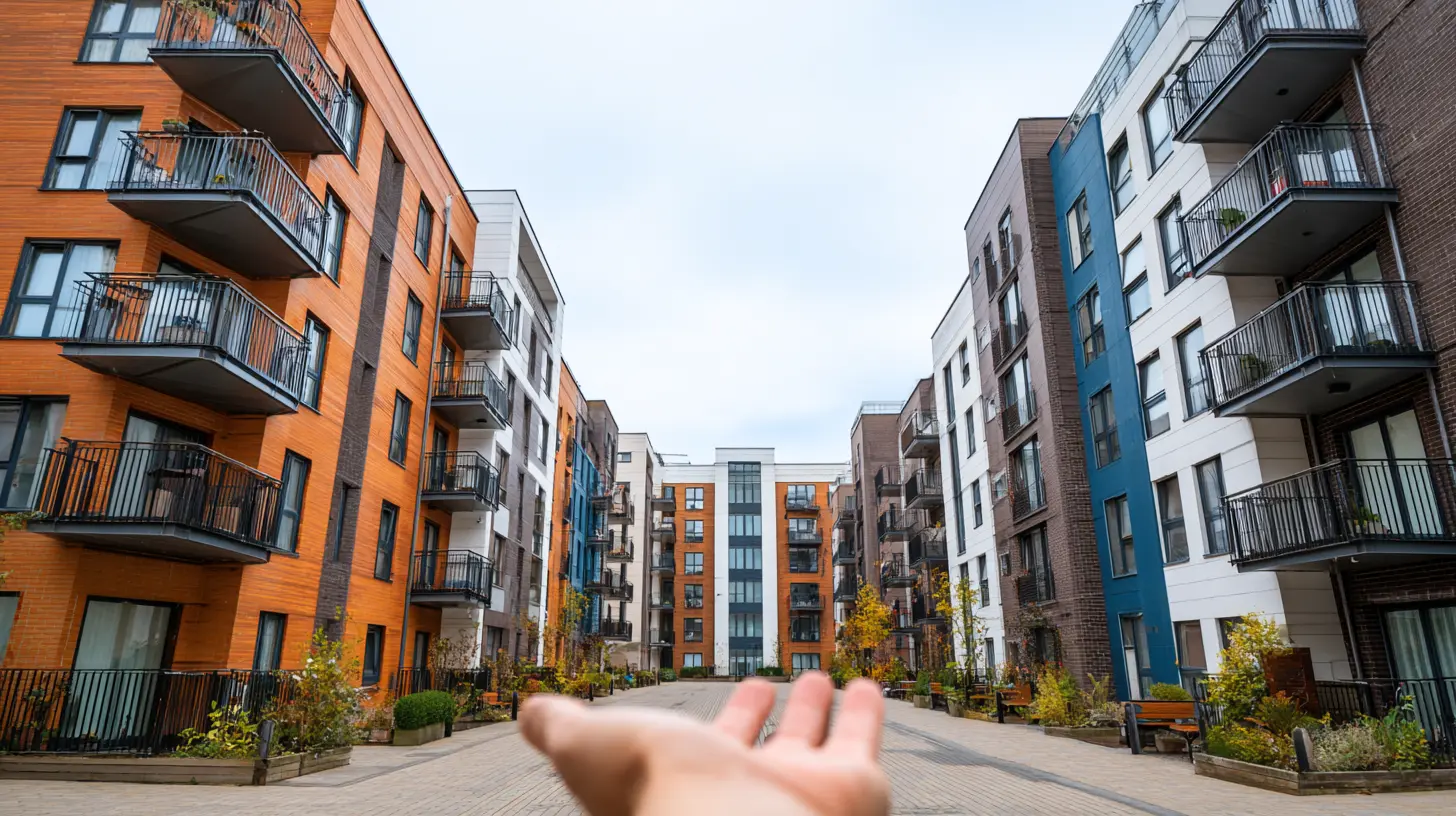
all images in this post were generated using AI tools
Category:
Buying Vs RentingAuthor:

Elsa McLaurin
Discussion
rate this article
2 comments
Melissa Castillo
Embrace the journey, homeownership awaits you in 2026!
May 24, 2026 at 11:41 AM
Elsa McLaurin
Thanks for the encouragement! Homeownership is definitely an exciting goal for many.
Sawyer Cook
Great article! It's exciting to see first-time buyers exploring options beyond renting. With the market evolving, it's the perfect time to take the leap and find a place to call home!
May 18, 2026 at 4:29 AM
Elsa McLaurin
Thanks for your thoughts! It's inspiring to see first-time buyers embracing new opportunities in today's market. Exciting times ahead!