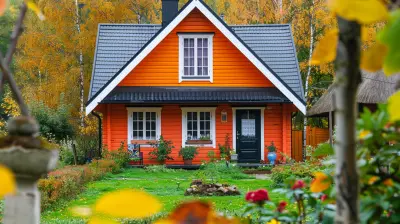
Why Renting Might Be the Smarter Option in 2026
4 May 2026
Let's be honest for a second. If you've spent any time scrolling through real estate news or listening to your uncle who "knows the market," you've heard the same old mantra: buying a home is the only path to wealth. It's been drilled into us for decades. But here's the thing-2026 is shaping up to be a very different beast. The rules that worked for your parents might not just be outdated; they could actually hold you back. So, let's flip the script and talk about why renting might be the smarter option in 2026. No sugarcoating, no sales pitch-just a straight-up conversation.
The Old Dream vs. The New Reality
Remember when buying a house felt like winning the lottery? You'd get a decent starter home for a price that didn't make you choke on your coffee. Fast forward to 2026, and that dream has a serious hangover. Home prices have been on a rollercoaster, and right now, they're stuck at the top of a loop. In many markets, you're looking at paying 30% to 50% more for a house than you would have just five years ago. Meanwhile, mortgage rates? They're hovering in a range that makes your eyes water-think 6% to 7% or even higher in some places. That's not a typo. That's the new normal.But here's the kicker: renting has quietly become the underdog. Landlords are competing for tenants in a way we haven't seen since the early 2000s. With new apartment complexes popping up like mushrooms after rain, rents in many cities are actually stabilizing or even dropping. So, before you empty your savings for a down payment, ask yourself: am I buying a home, or am I buying a headache?

The Financial Rabbit Hole of Buying
Let's talk numbers-but keep it simple. When you buy a house, you're not just paying the price tag. You're signing up for a never-ending list of costs that feel like a subscription service you can't cancel. There's property taxes, which seem to go up every year like clockwork. There's homeowners insurance, which in 2026 is skyrocketing thanks to climate change and natural disasters. Then there's maintenance. Oh, the maintenance. A new roof? That's $10,000. A broken HVAC? Another $5,000. And don't even get me started on the lawnmower you'll never use.Now compare that to renting. Your biggest worry is a monthly check that might be $200 to $500 less than a mortgage payment for a similar place. And when the dishwasher breaks? You call the landlord. When the roof leaks? Not your problem. In 2026, that peace of mind isn't just nice-it's a financial lifesaver. You can take that extra cash and invest it, travel, or just sleep better at night knowing you're not one plumbing emergency away from bankruptcy.
The Hidden Cost of Equity
Everyone loves to talk about "building equity." It sounds so grown-up, right? But here's the truth: equity isn't a magic money printer. In 2026, home prices are expected to grow at a snail's pace-maybe 2% to 3% a year if you're lucky. Meanwhile, inflation is eating away at your purchasing power. So, if you buy a $400,000 home with a 7% mortgage, you're paying nearly $28,000 in interest alone in the first year. Compare that to renting a similar place for $1,800 a month-that's $21,600 a year. You're saving over $6,000 annually just by renting, and that's before factoring in taxes, insurance, and repairs.Think of it this way: buying a home in 2026 is like buying a racehorse that's already tired. You're hoping it'll sprint, but it's more likely to jog. Renting, on the other hand, lets you stay light on your feet. You can pivot, move for a job, or downsize without losing your shirt.
The Flexibility Factor
Life in 2026 isn't what it used to be. Remote work is still a thing, but it's evolving. Companies are calling people back to the office-sort of. Maybe you need to be in the city three days a week, or maybe you're eyeing a move to a cheaper state. Renting gives you the freedom to adapt without the anchor of a mortgage.Imagine this: you buy a house in 2026, and two years later, your dream job pops up in another city. Now what? You can't just pack up and leave. You're stuck trying to sell in a market that might be slow, or you're becoming a reluctant landlord. Both options come with stress, fees, and a whole lot of gray hair. Renting? You give your 30-day notice, call a moving truck, and you're gone. It's like having a life with a "pause" button instead of a "commit" button.
The Career Shuffle
Let's be real-job stability in 2026 is a myth for many industries. Layoffs are still happening, and the gig economy is growing. Renting lets you match your housing costs to your income. If you take a pay cut or switch to freelance work, you can downsize to a cheaper apartment without a credit hit. Buyers don't have that luxury. They're locked into a 30-year commitment that assumes nothing changes. And let's face it, everything changes.
The Market Timing Trap
Here's a hard truth: timing the real estate market is like trying to catch a falling knife. In 2026, we're in a weird spot. Home prices are high, but they might not crash-they might just stagnate. Or they could dip if the economy sneezes. The problem is, nobody knows. And if you buy at the peak, you could end up "underwater"-owing more than your house is worth. That's not a fun place to be.Renting, on the other hand, is a hedge against that risk. You're not betting your life savings on a market that's as predictable as a cat's mood. You're paying for a roof over your head and nothing more. If prices drop in 2027 or 2028, you can swoop in and buy then. In the meantime, you're saving money and staying flexible. It's like sitting on the sidelines while everyone else is playing a game of musical chairs-you're not winning, but you're not losing either.
The Psychological Toll
Don't underestimate the mental weight of homeownership. In 2026, with inflation still high and supply chain issues lingering, fixing a house is more expensive and slower than ever. You might wait weeks for a plumber, and when they show up, they'll charge you a small fortune. Renting means you trade that stress for a landlord who handles the headaches. Sure, you might have to deal with a noisy neighbor or a strict lease, but that's a lot easier than a foundation crack.The Lifestyle Upgrade
Let's talk about the fun stuff. Renting in 2026 often means access to amenities that would cost a fortune to build yourself. We're talking rooftop pools, gyms, coworking spaces, and even pet spas. Many new apartment complexes are designed for how we actually live-not how our grandparents lived. You can walk to a coffee shop, take a yoga class in your building, and never touch a lawnmower. That's not just convenience; it's a quality-of-life boost.Compare that to buying a starter home in the suburbs. You're stuck with a yard you don't have time for, a commute that eats your soul, and a kitchen that's straight out of 1992. In 2026, renting lets you live where you want, not where you can afford to buy. And if you're young or single, that's a game-changer.
The Social Side
Renting also keeps you connected. In many cities, renters live closer to downtown areas, where the action is. You can walk to bars, restaurants, and events. Buyers often get pushed to the outskirts, where life is quieter but lonelier. If you value social connections and spontaneity, renting in 2026 is like having a front-row seat to life instead of a balcony view.
The Numbers Don't Lie
Let's crunch some quick, realistic numbers for a typical American city in 2026. Assume you're looking at a $350,000 home with a 7% mortgage. That's about $2,330 a month for principal and interest alone. Add $400 for taxes, $150 for insurance, and $200 for maintenance (which is lowballing it). You're at $3,080 a month. Now, rent a similar apartment in the same area? You might find one for $2,200 to $2,500. That's a savings of $500 to $800 a month. Over a year, that's $6,000 to $9,600. Invest that money in a simple index fund, and you're not just saving-you're growing wealth without the risk of a housing crash.And here's the kicker: that $2,330 mortgage payment? Most of it is interest in the first few years. You're not building equity as fast as you think. The bank is building equity. You're just paying their bills.
The Opportunity Cost
Every dollar you put into a house is a dollar you can't put into something else. In 2026, the stock market is volatile but offers higher long-term returns than real estate in many cases. Renting frees up cash for investments, education, or starting a business. It's the difference between owning one asset (a house) and owning a diversified portfolio. Which one sounds smarter?When Renting Isn't the Answer
Okay, I'm not going to pretend renting is perfect for everyone. If you're planning to stay in one place for 10 years or more, buying might still make sense. You'll eventually pay down the mortgage, and you'll build some equity. But in 2026, that's a big "if." Most people move every 5 to 7 years, and with remote work changing everything, that number might shrink. Also, if you live in a market where rents are insane (like New York or San Francisco), buying might actually be cheaper per square foot. But those are exceptions, not the rule.For most of us, renting in 2026 is like choosing a reliable sedan over a flashy sports car. It's not as sexy, but it gets you where you need to go without breaking down.
The Bottom Line
So, why renting might be the smarter option in 2026? Because it gives you financial breathing room, flexibility, and peace of mind in a world that's anything but predictable. You're not tied to a mortgage that could become a burden if the economy wobbles. You're not gambling on appreciation that might never come. You're simply paying for a place to live, and using the rest of your money to build the life you actually want.In 2026, the smartest move isn't always the one your parents made. It's the one that fits your reality. And for a lot of us, that reality looks a lot like renting.
all images in this post were generated using AI tools
Category:
Buying Vs RentingAuthor:

Elsa McLaurin
Discussion
rate this article
2 comments
Betsy McWain
Renting can often feel like a breath of fresh air, especially with all the uncertainty in the market. It gives you flexibility, avoids long-term commitment, and can save money for future opportunities. Sometimes, taking a step back is the best move forward...
May 28, 2026 at 4:52 AM
Elsa McLaurin
I completely agree. Renting offers a unique chance to adapt to changes while keeping options open. It's a practical choice in today's unpredictable market.
Solenne Riley
Great insights on the benefits of renting in 2026! It's refreshing to see a balanced perspective that highlights flexibility and financial freedom. This article really helps potential renters feel more confident about their choices in today's market. Thanks for sharing!
May 7, 2026 at 3:20 AM
Elsa McLaurin
Thank you for your thoughtful comment! I'm glad you found the article helpful. Renting can really offer a lot of advantages in today's market.