What Renters Should Know Before Becoming Owners in 2026
7 September 2026
The decision to stop renting and start owning is one of the most financially and emotionally significant moves an adult can make. But the path from leaseholder to homeowner in 2026 is not the same journey it was in 2016 or even 2021. The market has shifted, interest rates have settled into a new normal, and the very definition of a "good investment" has changed. If you are a renter with a growing savings account and a vague sense that you "should" buy, this guide is for you. It is not a cheerleading session for homeownership. It is a field manual for making a clear-eyed, informed transition.
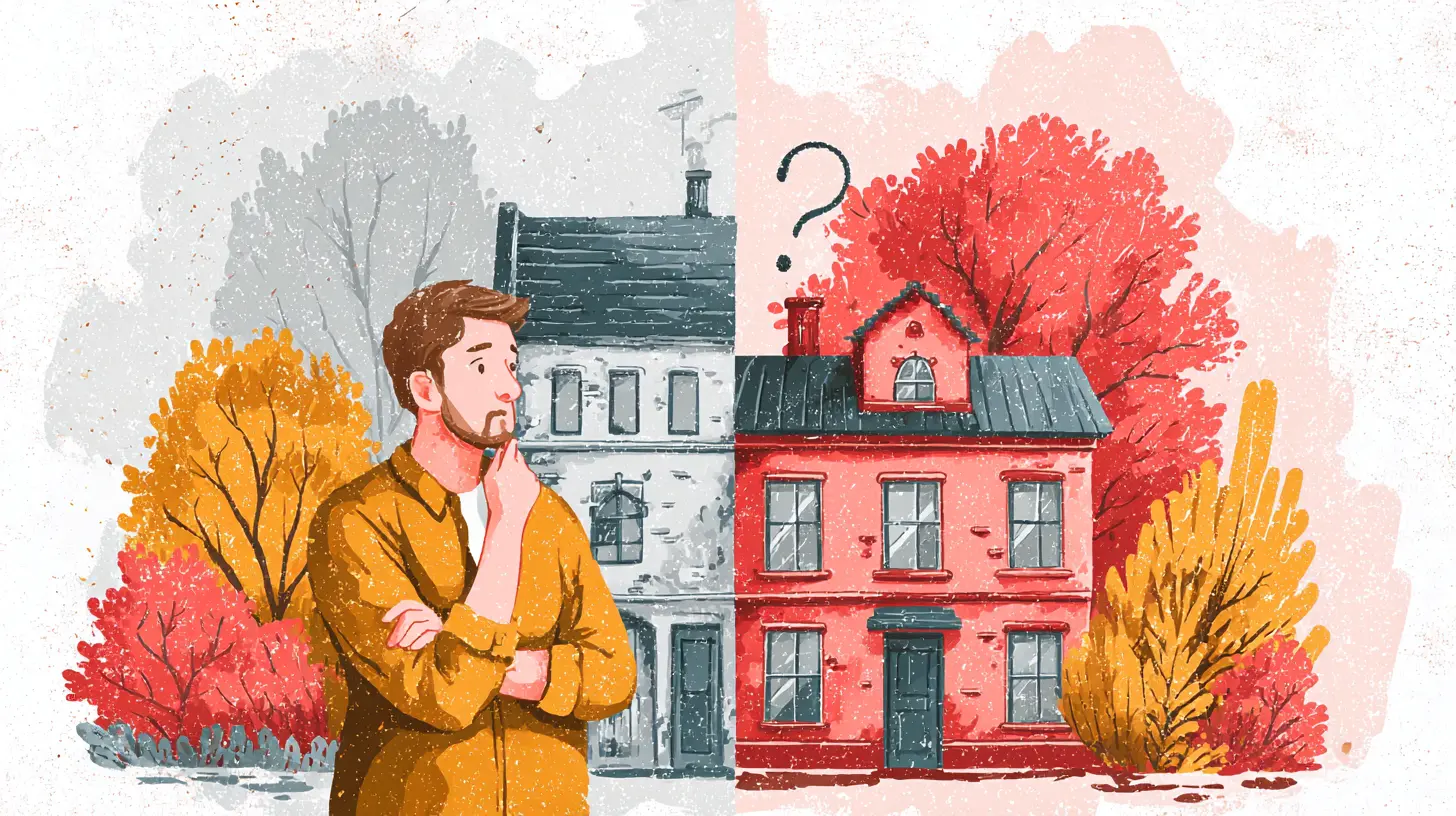
The 2026 Reality Check: Why This Year Is Different
Before you scroll through listings, you need to understand the macro environment. In 2026, we are living with the aftermath of the pandemic-era housing boom and the Federal Reserve's aggressive rate hikes. The result is a market that feels stuck. Home prices in many areas have plateaued but not crashed, because inventory remains tight. Sellers who locked in 3% mortgages in 2020 or 2021 are reluctant to list their homes and buy a new one at 6% or 7%. This is called the "rate lock-in effect," and it has frozen the supply of existing homes.At the same time, new construction has struggled to keep pace with demand due to high material costs and labor shortages. For renters, this means the "starter home" is a rare commodity. Condos and townhouses are often the only entry points in desirable urban and suburban areas. You are not just competing with other first-time buyers; you are competing with institutional investors and all-cash offers. This is not a market for the faint of heart or the financially fragile.
However, there is a silver lining. Rental prices have also stabilized in many regions, meaning your monthly outlay for a two-bedroom apartment might be comparable to a mortgage payment on a smaller property. The difference is that the mortgage builds equity, while the rent check disappears. But that difference only matters if you can sustain the ownership costs that go far beyond the principal and interest.
The True Cost of Ownership: Beyond the PITI
Most renters are familiar with the acronym PITI: Principal, Interest, Taxes, and Insurance. That is the baseline of your monthly mortgage payment. But 2026 demands a more comprehensive view. You must also budget for PMI (Private Mortgage Insurance) if your down payment is less than 20%, HOA fees if you buy a condo or townhouse, and the significant cost of maintenance.Here is a practical example. Suppose you find a condo for $350,000. You put down 5% ($17,500). Your loan amount is $332,500. At a 6.5% interest rate, your principal and interest payment is roughly $2,100 per month. Add $300 for property taxes and $150 for homeowners insurance, and you are at $2,550. Now add a $250 HOA fee and $100 for PMI. Your true monthly housing cost is $2,900.
If you are currently renting a similar unit for $2,200, the difference is $700 per month. That is $8,400 per year. In five years, that is $42,000 in additional cash outflow. You might build $30,000 in equity in that time, depending on appreciation, but you also have to account for repair costs. In a condo, you are responsible for the interior. A $5,000 HVAC failure in year three will wipe out a significant portion of your equity gains.
The common mistake here is comparing your rent to the PITI payment only. You must compare your rent to the all-in cost of ownership, including a line item for maintenance (usually 1% to 2% of the home's value annually) and a buffer for special assessments. If your rent is lower than the all-in cost, you are paying a premium for the convenience of ownership. That premium can be justified, but only if you plan to stay long enough for appreciation to outpace your extra costs.
The Down Payment Dilemma: How Much Is Actually Enough?
Conventional wisdom says you need 20% down to avoid PMI. In 2026, that wisdom is outdated for many buyers. With median home prices still high, saving $70,000 for a 20% down payment on a $350,000 home is a multi-year endeavor for most renters. Meanwhile, you are paying rent during those years, missing out on potential appreciation.Consider the alternative. Many lenders offer conventional loans with as little as 3% down. FHA loans require 3.5%. The trade-off is PMI, which adds roughly 0.5% to 1% of the loan amount annually. On a $300,000 loan, that is $1,500 to $3,000 per year, or $125 to $250 per month. That is not nothing, but it is often less than the annual appreciation you might capture.
Here is the nuance that many financial gurus miss: PMI is not permanent. Once you reach 20% equity, you can request to have it removed. If you make extra principal payments, you can accelerate that timeline. For example, if you buy a home with 5% down, you can pay an extra $100 per month toward principal. In most markets, you will hit 20% equity in about seven years. At that point, your PMI disappears, effectively giving you a raise.
The bigger mistake is draining your savings to make a larger down payment. You need cash reserves for closing costs (typically 2% to 5% of the purchase price), moving expenses, immediate repairs, and a six-month emergency fund. If you put 20% down and have no cash left, you are one job loss away from foreclosure. A 5% down payment with $20,000 left in the bank is a stronger financial position than a 20% down payment with $2,000 left.
Interest Rates: The New Normal and How to Play It
In 2026, mortgage rates are likely to hover between 5.5% and 7%. This is historically normal. The 3% rates of the pandemic era were an anomaly, a product of emergency monetary policy. Renting while waiting for rates to drop back to 3% is a losing strategy. It is like refusing to buy groceries because you remember when bread cost a dollar.The smart play is to focus on the "spread" between the mortgage rate and the rate of inflation. If mortgage rates are 6% and inflation is 3%, your real cost of borrowing is 3%. If you can buy a home that appreciates at 4% annually, you are ahead. The problem occurs when you stretch to buy at the top of your budget with a high rate and no room for error.
One strategy that works well in this environment is the "buy now, refinance later" approach. You accept the current rate, build equity for two or three years, and then refinance when rates inevitably drop. The key is ensuring you can afford the payment at the original rate. Do not assume you will refinance. Plan for the worst, and treat a rate drop as a bonus.
Another consideration is the "seller buy-down." Some builders and sellers are offering to pay points to reduce your interest rate for the first few years. This is a temporary reduction, not a permanent one. For example, a 2-1 buy-down means your rate is 2% lower in the first year and 1% lower in the second year, then reverts to the full rate in year three. This can help you manage cash flow early on, but you must be certain your income will grow to handle the higher payment later.
The Rent vs. Buy Calculation: A Framework, Not a Rule
There is no universal answer to whether renting or buying is "better." It depends on your timeline, your market, and your lifestyle. A useful framework is the "5-Year Rule." If you plan to stay in the same home for less than five years, renting is usually the better financial choice. Why? Because the transaction costs of buying and selling are high. You pay closing costs when you buy (typically 2% to 5%) and you pay commission when you sell (typically 5% to 6%). On a $400,000 home, that is $20,000 to $24,000 in sales commission alone. Plus, you have the costs of moving, possible repairs, and the risk of selling in a down market.If you stay for seven years or more, the math changes. Your equity grows, your mortgage payment stays relatively stable (unlike rent which increases yearly), and you amortize the transaction costs over a longer period. In 2026, with rent inflation averaging 3% to 5% in many cities, a fixed-rate mortgage is a powerful hedge. Your payment stays the same while your neighbor's rent goes up every year.
Here is a real-world comparison. Let's say you rent a house for $2,500 per month. Over seven years, with 4% annual rent increases, you will pay roughly $235,000 in rent. You will have nothing to show for it. Alternatively, you buy a similar house for $400,000 with a 5% down payment. Your mortgage payment (including taxes and insurance) is $2,900. Over seven years, you pay about $243,000 in housing costs. However, you also pay down the principal by about $30,000, and if the home appreciates at 3% annually, it is worth $491,000. Your equity is roughly $91,000 plus your initial down payment. The difference is stark.
But this example assumes you do not have major repairs, that you do not lose your job, and that your property taxes do not skyrocket. The point is not that buying is always better. It is that buying is better when you have stability and a long-term horizon.
Hidden Traps: HOA Fees, Special Assessments, and Property Taxes
Renters often overlook the three-headed monster of ownership: HOA fees, special assessments, and property tax increases.HOA fees are not just for luxury condos. Many single-family home neighborhoods have them too. These fees cover common area maintenance, amenities, and sometimes insurance. In 2026, HOA fees are rising faster than inflation due to increased insurance costs and deferred maintenance from the pandemic. A $200 monthly HOA fee might seem manageable, but check the association's financial health. Ask for the reserve study. If the reserve fund is underfunded, you could be hit with a special assessment of $10,000 or more for a new roof or parking garage repair.
Property taxes are another trap. When you buy, the tax assessment is often based on the previous owner's value. In many states, the assessment resets to the purchase price, which could be significantly higher. This means your monthly payment could increase by $200 or $300 after the first year. You must check the effective tax rate in your county and calculate the tax on the purchase price, not the current tax bill.
There is also the risk of tax increases over time. In growing cities, property tax levies increase to fund schools and infrastructure. Your payment is not fixed. It will go up. Make sure your budget has room for a 2% to 3% annual increase in taxes and insurance.
The Emotional Side: Why You Buy a Home, Not an Investment
Too many renters view a home purely as a financial asset. That is a mistake. A primary residence is a consumption asset first and an investment second. You need a place to live. The roof over your head has value regardless of appreciation.The emotional benefits of ownership include stability, the freedom to renovate, and the pride of having a place that is truly yours. But these benefits come with a psychological cost. You are responsible for everything. The toilet that runs, the leaky roof, the broken water heater. These are no longer the landlord's problem. They are yours.
If you are the type of person who does not want to spend a weekend mowing the lawn or fixing a faucet, you will either pay for maintenance or be miserable. That is not a moral failing. It is a preference. Renting provides a lifestyle that many people value: the ability to move on short notice, the lack of maintenance headaches, and the freedom to invest your savings in stocks or a business.
In 2026, the flexibility of renting is more valuable than ever. The job market is volatile. Remote work has made geographic mobility an asset. If you might need to relocate for a career opportunity, buying locks you down. Selling a home in a slow market can take months, and you may have to accept a lower price. Renting gives you the ability to give 30 days' notice and move.
The Best Situations for Buying in 2026
You are a good candidate for buying if you meet several of these criteria:1. You have a stable job with a steady income that covers the all-in cost of ownership with at least a 10% buffer.
2. You have a down payment of at least 5% plus closing costs and a six-month emergency fund.
3. You plan to stay in the same area for at least five to seven years, barring unexpected life changes.
4. You find a property that is priced fairly compared to comparable rentals in the area.
5. You are willing to accept the responsibility of maintenance and repairs.
6. You understand that the first few years of your mortgage payment are mostly interest, and you are okay with that.
If you meet these criteria, buying in 2026 can be a smart move. The market is not as hot as it was in 2021, which means you have more time to negotiate. Sellers are more willing to offer concessions, such as paying for closing costs or buying down your interest rate. You are not in a bidding war frenzy, but you still need to act quickly when you find the right place.
The Best Situations for Continuing to Rent
You should probably keep renting if you find yourself in these situations:1. You are not sure if you will stay in your current city for more than three years.
2. You have minimal savings and would need to use your entire emergency fund for the down payment.
3. Your income is variable, such as commission-based or freelance work.
4. You are in a market where the price-to-rent ratio is exceptionally high, meaning homes are overvalued compared to rental rates.
5. You value the ability to walk away from a problematic building or neighborhood without a financial loss.
There is no shame in renting. In fact, for many people in their 20s and 30s, renting is the financially superior choice. It allows you to invest in index funds, which historically have returned 7% to 10% annually, while you avoid the illiquidity and transaction costs of real estate. The stock market does not require you to replace a roof.
Practical Steps: From Lease to Keys
If you have decided to buy, here is a step-by-step approach for 2026.First, get pre-approved, not just pre-qualified. A pre-approval means the lender has verified your income, assets, and credit. This gives you a clear budget and shows sellers you are serious. Shop around for a lender. Compare rates, fees, and closing costs. A difference of 0.25% in your rate can save you thousands over the life of the loan.
Second, find a buyer's agent who works exclusively with first-time buyers. They should explain the process, negotiate on your behalf, and help you understand the disclosures. Do not rely on the listing agent. They represent the seller.
Third, get a thorough home inspection. Do not skip this to save $400. A good inspector will identify structural issues, mold, electrical problems, and plumbing defects. In 2026, pay special attention to the age of the roof, HVAC system, and water heater. These are the big-ticket items that will need replacement within the next five years.
Fourth, review the HOA documents carefully before making an offer. Look for restrictions on rentals, pet rules, and any pending lawsuits. A lawsuit against the HOA can lead to special assessments and difficulty selling the home later.
Fifth, negotiate for seller concessions. In a slower market, sellers are often willing to pay for a home warranty, contribute to closing costs, or buy down your interest rate. This can reduce your upfront cash outlay and lower your monthly payment.
Common Misconceptions to Avoid
One major misconception is that you must buy a single-family home. In many markets, a condo or townhouse is a smarter entry point. It costs less, requires less maintenance, and often includes amenities like a gym or pool. The trade-off is HOA fees and less privacy. But for a first-time buyer, a condo can be a great way to start building equity without being house-poor.Another misconception is that a larger down payment is always better. As discussed, liquidity matters. If you put down 20% and have no cash left, you are in a risky position. A 10% down payment with a robust emergency fund is a safer bet.
Finally, do not assume that home values always go up. They do not. There are periods of stagnation and decline. In 2008, many homeowners lost 30% or more of their home's value. Buying is not a guaranteed path to wealth. It is a leveraged bet on your local economy and your personal stability.
The Final Verdict: Renting Is Not Failure
The cultural pressure to own a home is immense. Parents, friends, and financial media all push the narrative that renting is "throwing money away." This is a shallow view. You are not throwing money away. You are paying for a service: housing. The landlord bears the risk of maintenance, taxes, and market downturns. You pay for the convenience of not dealing with those issues.In 2026, the smartest move is to run the numbers for your specific situation and then make a decision based on your life goals, not on what everyone else is doing. If you buy, do it because you want the stability of a home and you are prepared for the financial commitment. If you rent, do it because you value flexibility and you have a plan for investing your savings elsewhere.
Your home is where you live. It is not a stock ticker. The best decision is the one that allows you to sleep at night, pay your bills, and enjoy your life. Whether that involves a mortgage or a lease is a detail, not a definition of your success.
all images in this post were generated using AI tools
Category:
Buying Vs RentingAuthor:

Elsa McLaurin
Discussion
rate this article
2 comments
Vance Ortiz
As dreams of homeownership beckon, balance the heart's desire with the mind's wisdom. Navigate the journey with care, for in each choice lies the foundation of tomorrow's embrace...
September 30, 2026 at 4:24 AM
Kristina McKinley
Homeownership: more lawn care, less Netflix bingeing!
September 11, 2026 at 3:13 AM
Elsa McLaurin
True! Homeownership brings new responsibilities, but it can also be rewarding. Balancing lawn care with downtime is key.