The Role of Technology in Modern Real Estate Appraisals
28 March 2026
The real estate industry has seen a massive shift in recent years, and it’s all thanks to technology. Gone are the days when property appraisals relied solely on in-person inspections and manually compiled reports. Today, tech innovations have streamlined the entire process, making real estate appraisals more accurate, efficient, and data-driven than ever before.
But what role does technology actually play in this transformation? How has it changed the way properties are valued? And most importantly—what does it mean for buyers, sellers, and investors?
Let’s dive into the world of modern real estate appraisals and uncover how technology is reshaping this critical aspect of the market.

The Shift from Manual to Digital Appraisals
Not too long ago, real estate appraisals were mostly based on physical inspections, paper records, and a lot of human judgment. While expertise still plays a big role, technology has revolutionized how appraisals are conducted.With advanced data analytics, artificial intelligence (AI), and digital tools, appraisers can now assess properties with a level of precision that was unheard of just a decade ago. This shift from traditional to tech-enhanced valuations has brought several benefits, including:
- Faster turnaround times – What used to take days or even weeks can now be done in hours.
- Greater accuracy – Data-driven insights leave less room for error.
- Cost-effectiveness – Reduced manual effort leads to lower expenses.
So, what are the specific technologies driving this change?

1. Big Data and Predictive Analytics in Property Valuation
If there’s one thing that real estate thrives on, it’s data. Whether it’s past sales, market trends, or neighborhood demographics, every small detail matters when appraising a property.Thanks to big data, appraisers now have access to vast amounts of information that can be analyzed in real time. Predictive analytics takes this a step further by assessing patterns and forecasting future property values based on historical and current market conditions.
How Does Predictive Analytics Help?
- Improved price accuracy – By evaluating trends, appraisers can determine a property’s value more precisely.- Risk assessment – Identifies potential fluctuations in property values, helping investors make informed decisions.
- Neighborhood analysis – Factors like crime rates, school quality, and economic growth can be considered instantly.
Before technology, appraisers had to rely on their own assessments and limited regional data. Now, AI-powered analytics can process thousands of data points in seconds, providing deeper insights than ever before.

2. Artificial Intelligence (AI) and Machine Learning in Appraisals
AI isn’t just for self-driving cars and chatbots—it's also reshaping real estate appraisals in a big way. Machine learning algorithms can analyze historical data, compare properties, and assist appraisers in determining property values with incredible accuracy.What Can AI Do in Real Estate Appraisals?
- Automated property comparisons – AI can instantly compare properties with similar features and sales history.- Market condition analysis – AI tools assess current market trends and offer fair property pricing.
- Fraud detection – AI can spot irregularities in property documents to reduce fraud risks.
Imagine an appraiser as a detective trying to solve a case. With AI by their side, they have an advanced magnifying glass that highlights the most relevant clues, making their job faster and more efficient.
3. The Role of Blockchain in Property Appraisals
When people hear "blockchain," they often think of cryptocurrency. But blockchain is much more than Bitcoin—it’s also transforming real estate appraisals.Blockchain technology provides a secure, transparent, and tamper-proof way to store and verify property records. This means appraisers and buyers can trust that the data they’re using is accurate and unaltered.
Why Is Blockchain Important for Real Estate Appraisals?
- Eliminates data manipulation – Property history and transactions are securely recorded.- Speeds up the verification process – No more digging through piles of paperwork.
- Reduces fraud – With blockchain, forged property documents become a thing of the past.
As more organizations adopt blockchain for real estate transactions, appraisals will become even more reliable and transparent.
4. Drone Technology for Property Inspections
In traditional appraisals, appraisers had to physically inspect every inch of a property. Today, drones are taking over this task, offering high-resolution images and video footage that provide a comprehensive view of a property without requiring a physical visit.How Do Drones Help in Real Estate Appraisals?
- Faster, more efficient inspections – No need for lengthy walkthroughs.- Access to hard-to-reach areas – Drones can capture roof conditions, large land plots, and commercial buildings.
- Visual data for buyers and sellers – High-quality images help in better decision-making.
Drones act as an appraiser’s eyes in the sky, making property valuation more detailed and efficient.
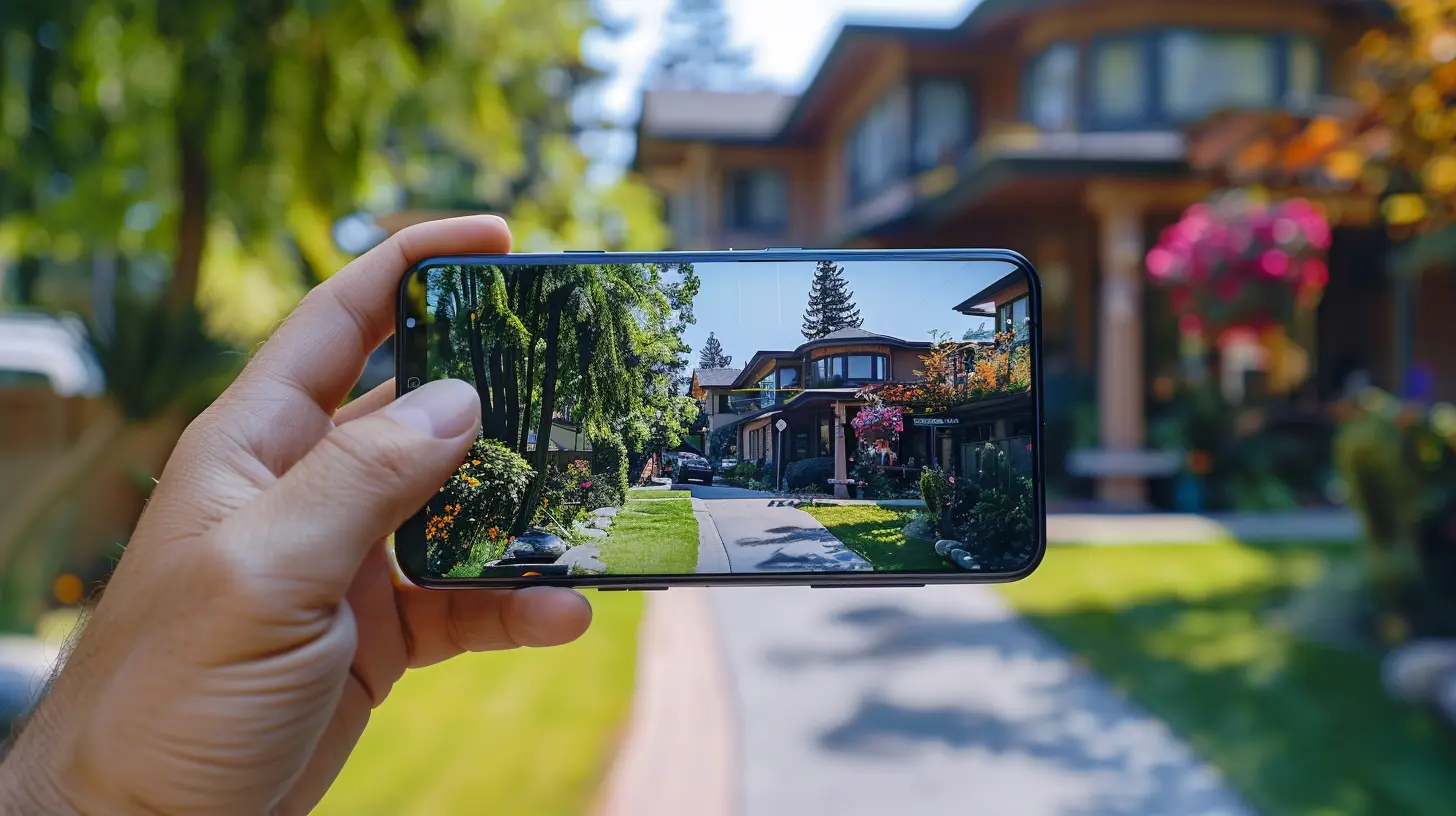
5. Augmented Reality (AR) and Virtual Reality (VR) in Property Valuation
Imagine being able to "walk through" a property without ever stepping foot on-site. That’s exactly what Virtual Reality (VR) and Augmented Reality (AR) bring to the table.These technologies allow appraisers to conduct virtual property inspections, helping them assess a property's condition and layout remotely. This is especially useful for properties in distant locations or under construction.
How AR and VR Benefit Appraisals:
- Remote property evaluations – Ideal for international or out-of-state investors.- Enhanced visualization – Helps buyers and sellers understand property potential.
- More informed appraisals – Allows appraisers to assess virtual staging and renovations.
Tech like AR and VR makes property appraisals more interactive and accessible, ensuring better valuation accuracy.
6. Automated Valuation Models (AVMs)
Automated Valuation Models (AVMs) are advanced algorithms that estimate a property’s value using data from public records, recent sales, and market trends. These models are already widely used by banks, lenders, and real estate professionals.Why Are AVMs Game-Changers?
- Instant property value estimates – No need to wait days for an appraisal.- Objective assessment – Eliminates human bias.
- Data-backed accuracy – Uses real-time market data for precise valuations.
While AVMs don’t completely replace human appraisers, they serve as a powerful tool that enhances accuracy and speeds up property valuations.
What Does This Mean for the Future of Real Estate Appraisals?
Technology isn’t replacing real estate appraisers—it’s empowering them. Instead of spending endless hours sorting through documents and making subjective estimates, appraisers can now leverage digital tools to deliver more precise, data-driven valuations.For home buyers, this means fairer pricing and more transparency.
For sellers, faster appraisals can help close deals quicker.
For investors, AI-driven insights can guide better decision-making.
As technology continues to evolve, we’ll see even smarter, faster, and more efficient appraisal processes that benefit everyone in the real estate industry.
So, whether you're buying your dream home, selling a property, or investing in real estate, tech-driven appraisals ensure that you’re making informed decisions based on reliable data. And that, my friend, is a game-changer!
Final Thoughts
Real estate appraisals have come a long way from the days of manual inspections and paper reports. Thanks to big data, AI, blockchain, drones, AR/VR, and AVMs, the process is now more efficient, accurate, and reliable than ever before.The question isn’t whether technology will continue to revolutionize real estate appraisals—it’s how quickly and to what extent. One thing’s for sure: the future of real estate valuation is digital, and it’s already here!
all images in this post were generated using AI tools
Category:
Real Estate AppraisalAuthor:

Elsa McLaurin
Discussion
rate this article
2 comments
Piper Lane
Who knew appraisals could get so high-tech? Next, we’ll have drones delivering property values—just don’t forget to tip your appraiser for a good flight!
April 6, 2026 at 3:26 AM
Elsa McLaurin
It's true, technology is changing the game! Who knows what the future holds for appraisals... maybe drone deliveries could be next!
Veronica Mullen
Great insights on how technology is transforming real estate appraisals! It’s fascinating to see how innovation enhances accuracy and efficiency, making the process smoother for everyone involved. Keep up the awesome work!
March 31, 2026 at 4:18 AM
Elsa McLaurin
Thank you for your kind words! I'm glad you found the insights valuable. Technology truly is reshaping the appraisal landscape for the better!