Data centers and real estate: What housing professionals need to know
August 27, 2026 - 04:23
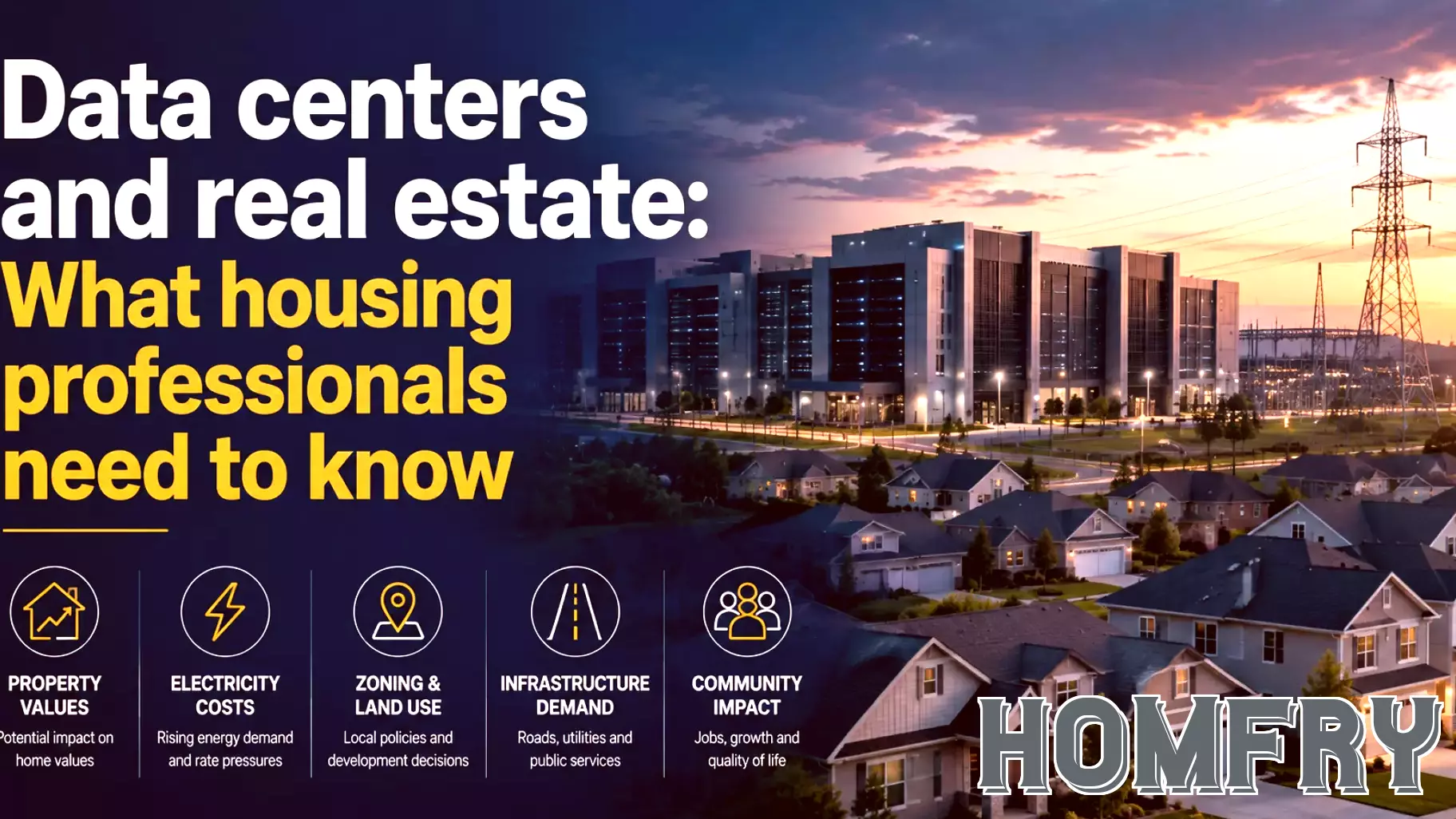
The rapid expansion of data centers across the United States is no longer just a tech sector story. It has become a major force in local real estate, affecting everything from monthly utility bills to the price of a single-family home. For housing professionals, understanding this shift is no longer optional.
The most immediate impact is on infrastructure. Data centers are massive consumers of electricity and water, and their arrival often triggers upgrades to local power grids and water systems. While these upgrades can improve service reliability, they also come with costs that utilities often pass on to residents. In some regions, homeowners have already seen noticeable increases in their electric bills as utilities spread the expense of new substations and transmission lines across the customer base.
Home pricing is another area of concern. When a large data center campus is announced, it often brings hundreds of construction jobs and a wave of permanent technical staff. That influx of higher-income workers can tighten an already limited housing supply, pushing up rents and sale prices in surrounding neighborhoods. For housing developers, this creates a tricky dynamic: demand is rising, but so are land costs and construction expenses, especially if the data center is competing for the same parcels.
There is also the question of zoning and land use. Many municipalities are eager to approve data center projects for the tax revenue they promise, but that can divert land that might otherwise be used for residential development. In areas where buildable land is scarce, this competition can delay new housing projects or force them into less desirable locations. Some local governments are starting to push back, requiring data center developers to contribute to housing funds or infrastructure improvements as a condition of approval.
For housing professionals, the takeaway is clear: data centers are not just industrial buildings. They are catalysts for demographic and economic change. Builders and agents who track data center announcements can gain a real edge, anticipating where demand will spike and where infrastructure costs might create hidden challenges. The key is to look beyond the headline of a new facility and examine the long-term ripple effects on the local housing market.
MORE NEWS

October 10, 2026 - 21:07
Our Move from Australia to New York City Came With a Hefty Price Tag and a Few RegretsRelocating a family across the world is never a simple decision, and moving from Australia to New York City turned out to be one of the most expensive choices we have ever made. The costs piled up...

October 10, 2026 - 17:56
Top Residential Property Sales in DuPage and Cook County During the Week of Sept. 28A single-family home in Chicago that sold for $400,000 tops the list of the best residential real estate deals in DuPage and Cook County for the week of Sept. 28. The sale stands out among a group...

October 10, 2026 - 00:25
VladEnterprises Expands Into Real-World Asset Technology for Real Estate Under Developer Vlad ChiriacLos Angeles-based technology company VladEnterprises has announced a new development focus on property-linked systems designed to make real estate information easier to verify, report, and...
October 9, 2026 - 02:17
REAL ESTATE | Quality Packaging, Inc. of FDL acquires 2 facilities in West Bend, WiQuality Packaging, Inc. has completed the acquisition of two manufacturing facilities in West Bend, Wisconsin. The deal, which closed recently, adds roughly 150,000 square feet of combined space to...